
Davidsonia
Davidsonia
Davidsonia is a genus of evergreen trees belonging to the Cunoniaceae family, native to the tropical rainforests of eastern Australia. These trees are known for their distinct botanical structure and are highly valued in both ornamental horticulture and food production.
What the section contains

Davidsonia
The climate requirements for Davidsonia are quite specific; the plant thrives in tropical and subtropical regions where temperatures remain stable throughout the year. It demands high levels of humidity and protection from harsh, dry winds that can damage its large, compound foliage.
Regarding soil requirements, the tree prefers deep, well-draining soils rich in organic matter. While it needs consistent moisture, it is sensitive to waterlogging, so proper drainage infrastructure is essential when establishing an orchard or a home garden planting.
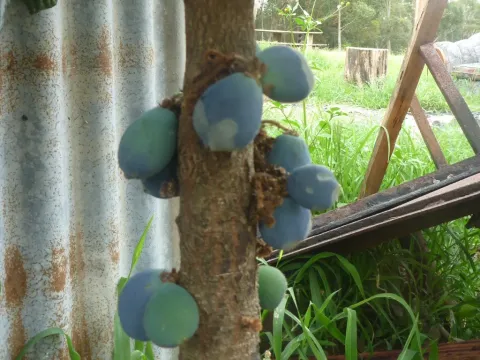
The botanical feature of cauliflory, where fruits emerge directly from the trunk, is a hallmark of this species. This unique growth habit requires specific spacing and canopy management to ensure that the fruiting wood remains healthy and productive over time.
In terms of usage, Davidsonia fruits are renowned for their intense acidity and sour taste. They are widely processed into gourmet jams, sauces, and beverages, often sought after by chefs for their culinary versatility and potential as a nutritional superfood.
The primary threats to Davidsonia health include various soil-borne pathogens, such as Phytophthora, which flourish in overly wet conditions. Preventing root rot is the most critical aspect of long-term plantation maintenance.
Insect pests such as leaf-eating caterpillars and fruit flies can pose seasonal risks. Integrated pest management strategies, including the use of pheromone traps and biological controls, are highly recommended to keep infestations at manageable levels.
Harvesting Davidsonia requires careful attention to detail. Since the fruit is borne in clusters on the trunk, it must be hand-picked to avoid damaging the delicate bark and the fruit skin, which bruises very easily during transport.
Post-harvest handling is crucial due to the fruit's perishable nature. It is typically recommended to process the harvest within 24–48 hours or to utilize immediate freezing techniques to ensure that the intense flavor and bioactive compounds are preserved.