
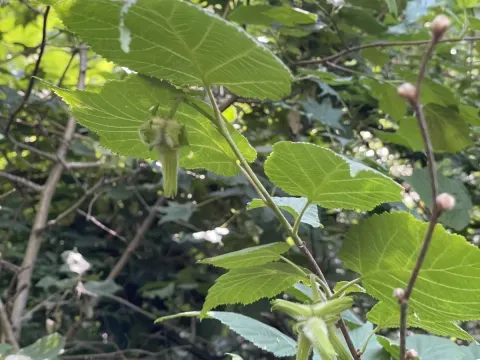
Siebold's hazel
Corylus sieboldiana
Siebold's hazel (Corylus sieboldiana) is a member of the Betulaceae family. It is a deciduous shrub that typically grows to a height of 3 to 5 meters. The species is easily recognizable by its distinctive, elongated, bell-shaped involucre that encloses the nut.
What the section contains
Siebold's hazel
Native to East Asia, including Japan and the Russian Far East, this shrub is well-adapted to temperate climates. It exhibits significant winter hardiness, allowing it to thrive in various open-field conditions provided the site is selected with care regarding local microclimate.
The plant requires deep, fertile, and well-drained soils to reach its full productive potential. Loamy soil textures that retain moisture without becoming waterlogged are ideal. It is sensitive to highly alkaline or salty soils, which can lead to chlorosis and stunted growth.
Sunlight is essential for optimal flower bud formation and nut ripening. While Siebold's hazel can tolerate partial shade, full sun exposure results in higher yields. Site selection should also prioritize protection from strong, desiccating winds during the early spring season.
Cultural practices include maintaining a weed-free zone around the shrub base and applying organic mulch. Regular pruning is necessary to remove dead or diseased wood and to maintain an open structure that allows for sufficient airflow and light penetration throughout the crown.
The primary agricultural use of Siebold's hazel is for its edible nuts, which are harvested for local consumption or specialized processing. These nuts are dense in nutrients, providing essential fatty acids and proteins. Their unique outer husk offers a natural defense mechanism against some pests.
Beyond fruit production, the species is valuable in landscape architecture for its attractive foliage and structural form. Its vigorous root system makes it an excellent candidate for erosion control on slopes and for reforestation efforts in managed woodland areas.
Nut weevils are the most common pests, capable of damaging a significant portion of the harvest if left unmanaged. Integrated pest management strategies, such as gathering and destroying fallen infested nuts, are recommended to maintain healthy population levels.
Fungal issues such as powdery mildew may occur, especially in humid or poorly ventilated environments. Maintaining proper spacing between shrubs during planting is a key preventive measure against fungal outbreaks and ensures healthier foliage throughout the growing season.