
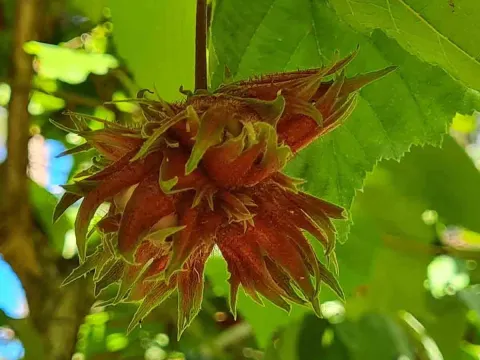
Turkish hazel
Corylus colurnoides
The seeds of the Turkish hazel must undergo a period of cold stratification, which typically lasts from four to six months for optimal germination.
What the section contains
Turkish hazel
For best results, seeds should be sown in prepared nursery beds during the autumn, allowing natural winter conditions to break dormancy.
Sowing depth should be maintained at approximately 5 to 7 centimeters to prevent premature drying and protect the seeds from wildlife predation.
Commercial plantations are usually established using nursery-grown seedlings, as this method ensures more predictable results and uniform orchard development.
When planting, it is essential to allow ample space, as the tree exhibits a vigorous growth habit and forms a distinct pyramidal crown over time.
Turkish hazel, belonging to the Betulaceae family, is a robust tree species known for its remarkable tolerance to environmental stressors.
The species thrives in deep, well-drained loamy soils and exhibits a preference for sites with adequate moisture and a neutral to slightly alkaline pH.
One of its primary advantages is high winter hardiness, allowing it to flourish in colder temperate regions where other nut trees might struggle.
Young trees require consistent watering during their initial establishment phase to develop a healthy root system capable of sustaining the tree in later years.
Minimal pruning is typically required, focused primarily on removing dead or crossing branches to maintain tree health and structural integrity.
Turkish hazel typically begins bearing fruit between 7 and 10 years of age, representing a long-term investment for growers and landowners.
The nuts are characterized by a thick shell and a deeply fringed involucre, which offers excellent natural protection against insect damage and wildlife.
Kernel quality is high, featuring a balanced nutritional profile rich in healthy fats, proteins, and essential vitamins for human consumption.
Beyond nut production, the timber of this species is highly regarded for its strength, fine grain, and aesthetic appeal in fine woodworking.
Consistent production depends heavily on cross-pollination, so planting multiple genetic variants in the orchard is recommended for higher yields.
The nut weevil is the primary insect pest associated with this species, often requiring vigilant monitoring and integrated management strategies.
Fungal diseases, including powdery mildew, may affect foliage during periods of stagnant, humid air, necessitating good orchard hygiene practices.
Rodents can cause significant damage to the bark of young trees during winter, making protective mesh collars a standard necessity for new plantations.
Maintaining proper airflow within the canopy through selective thinning helps to reduce the prevalence of humidity-related pathogens significantly.
Routine inspection of leaves and nut husks allows for the early detection of pests, facilitating localized interventions rather than broad applications.
Harvesting usually occurs in late summer or early autumn, indicated by the drying and browning of the nut husks on the branches.
The nuts can be collected by gently shaking the tree or harvesting them directly from the ground once they have naturally detached.
Post-harvest processing involves removing the husks and curing the nuts in well-ventilated trays to ensure moisture levels drop to safe storage limits.
Proper curing is critical to prevent the growth of molds and fungi, which can otherwise compromise the quality of the kernels during storage.
Stored in cool, dry conditions with adequate air circulation, the nuts can maintain their quality and flavor for an extended period of time.