
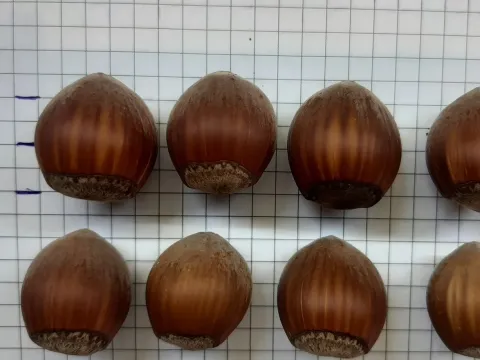
Hybrid Hazelnut
Corylus hybrids
Hybrid hazelnut (Corylus hybrids) belongs to the Betulaceae family. These are high-yielding varieties developed through interspecific hybridization of common hazel with larger-fruited species, combining disease resistance with excellent nut quality.
What the section contains
Hybrid Hazelnut
The crop thrives in temperate climates with well-distributed rainfall. It requires sunny locations to ensure proper flower bud initiation and ripening of the nuts, while modern hybrids demonstrate good cold hardiness even in cooler northern regions.
Optimal soil conditions include fertile, well-drained loams with a slightly acidic to neutral pH. Proper soil aeration is vital for root health, and farmers must avoid heavy clay soils that are prone to waterlogging during the spring melt.
Water management is a key factor in successful production. Intensive orchards rely on drip irrigation systems to provide a consistent water supply during the critical summer development phase, directly impacting yield volume.
Pruning is essential for maintaining plant structure. By keeping the center of the bush open and removing excessive suckers, growers ensure optimal light penetration, which is crucial for photosynthesis and overall tree productivity.
Hybrid hazelnuts are highly valued for their productivity. In established, well-managed orchards, yields can reach significant volumes, typically ranging from 2 to 3.5 tonnes of kernel per hectare depending on the variety and spacing.
Orchards reach commercial production maturity within 5 to 7 years. Sustained yields require an organized fertilization program based on regular soil and leaf analysis to ensure the plants receive necessary micronutrients.
The nut industry utilizes these hybrids primarily for confectionery products, spreads, and high-quality oils. The stability of kernel size and composition makes them a preferred choice for large-scale processing companies.
The most common pests affecting hazelnuts include the filbert worm and various types of aphids. Regular monitoring and the use of pheromone traps are recommended to control pest populations before they cause significant economic damage.
Fungal diseases like Eastern Filbert Blight (EFB) and powdery mildew can severely impact orchards. Implementing strict sanitation practices, such as pruning out infected branches, is the first line of defense for a healthy crop.
Integrated Pest Management (IPM) strategies, which include a mix of biological, cultural, and chemical controls, are standard practice for sustainable hazelnut farming. This approach minimizes negative impacts on the environment.
Harvesting usually occurs in late summer or early autumn. Mature nuts are typically harvested mechanically once they have naturally dropped to the ground, ensuring they have reached their peak flavor and oil content.
Post-harvest processing involves cleaning the nuts to remove debris, followed by drying to reduce moisture content to approximately 7-9%. Proper drying is the most critical step to prevent mycotoxin development and ensure long-term shelf life.