
Beaked hazelnut
Corylus cornuta
Beaked hazelnut (Corylus cornuta) is a deciduous shrub belonging to the Betulaceae family, native to North America. It is highly valued for its winter hardiness and versatility in various landscape settings.
What the section contains
Beaked hazelnut
The plant thrives in well-drained, fertile soil with moderate moisture levels. It adapts well to diverse pH levels, showing a preference for slightly acidic to neutral soil environments.
While the shrub prefers sunny positions for maximum fruit production, it exhibits good shade tolerance, making it an excellent choice for hedgerows or understory plantings.
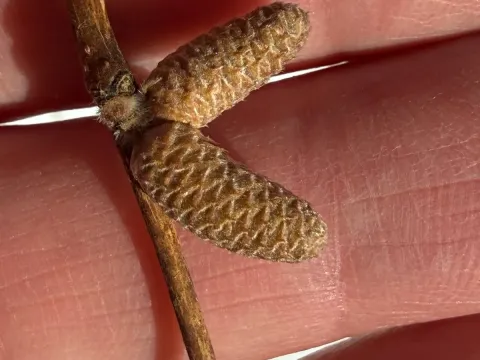
Botanically, the plant is characterized by its unique husks that extend well beyond the nut, forming a distinctive beak shape. Flowering occurs in early spring before leaf development.
Proper maintenance includes spring fertilization with organic compost and a layer of mulch to conserve soil moisture and suppress weed competition around the root zone.
Common plant health issues include powdery mildew and leaf spot diseases, which typically develop in conditions with poor air circulation or excessive humidity.
The most significant insect pest is the nut weevil, which can damage a substantial portion of the crop if left unmanaged. Big bud mites may also affect young buds.
Effective management strategies include dormant season pruning to improve canopy airflow and the targeted application of organic or chemical fungicides as necessary.
Removing and destroying fallen leaves and diseased twigs is critical to minimize the overwintering population of fungi and pests within the garden.
Regular monitoring of the canopy during the growing season allows for early intervention, ensuring higher yields and healthier shrub development.
Harvesting typically takes place in late summer or early autumn when the husks begin to turn dry and brownish, indicating full maturity of the nuts inside.
After collection, the nuts should be dried in a well-ventilated, shaded area to reduce moisture content, which is vital for long-term preservation and preventing mold.
The plant has diverse uses, ranging from ecological restoration and soil stabilization to culinary applications and small-scale ornamental landscaping.
Stored in cool and dry conditions, the nuts maintain high quality for extended periods, providing a nutritious and sustainable food source for homesteaders.
Due to its relatively smaller nut size compared to common filberts, it remains a specialty crop, often favored for its resilience and unique ecological footprint.