
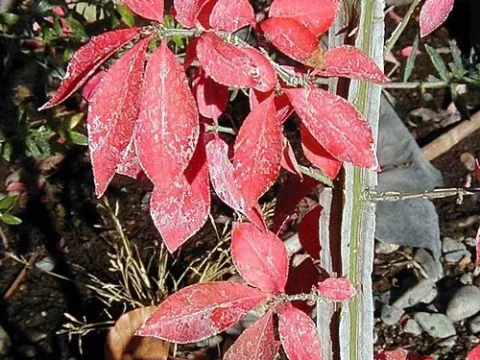
Cork-barked spindle
Euonymus phellomanus
Euonymus phellomanus, known as the cork-barked spindle, is a deciduous shrub from the Celastraceae family. It is native to the mountain regions of China and is highly prized for its unique architectural form.
What the section contains
Cork-barked spindle
The plant is defined by its distinct corky ridges on the stems, which provide significant winter interest in the landscape. It usually grows to a height of 2 to 3 meters, forming a dense and rounded habit.
It thrives in full sun or partial shade and prefers moist, well-drained, and nutrient-rich soil. While adaptable, it performs best in soils with a slightly acidic to neutral pH level.
Agrotechnical care includes consistent watering during drought, mulching to maintain soil moisture, and regular pruning to improve air circulation and shape. The species is hardy and generally survives cold winters well.
In terms of usage, it is widely utilized in ornamental landscaping as a specimen plant, in mixed shrub borders, or as a focal point in woodland garden designs due to its vibrant autumn foliage.
Common pests that can affect the health of the plant include spider mites, aphids, and scale insects, which may cause leaf yellowing or stunted growth.
Powdery mildew is a prevalent fungal issue, particularly in humid or stagnant air environments where leaves do not dry off quickly enough after rain.
Effective management includes maintaining proper spacing between plants to ensure adequate ventilation and applying horticultural oils or soap sprays if pests are detected.
Fungal infections can be controlled by applying preventive systemic fungicides at the first sign of leaf spotting or white mycelial growth.
Vigilant inspection of the undersides of leaves and stems is recommended throughout the spring and summer to ensure early detection of infestations.