
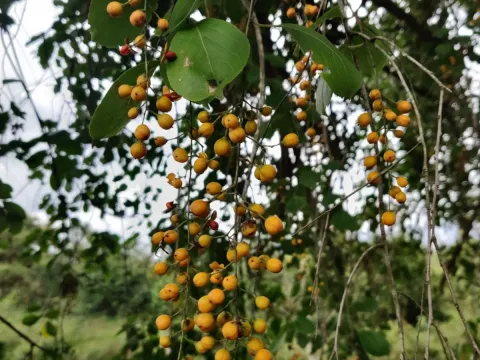
Celastrus paniculatus
Celastrus paniculatus
Celastrus paniculatus, commonly known as the Intellect Tree, is a woody climbing shrub belonging to the Celastraceae family. It is native to the tropical and subtropical forests of India and parts of Southeast Asia, thriving in diverse hilly landscapes.
What the section contains
Celastrus paniculatus
The plant requires well-drained, sandy loam soils rich in organic matter. While it is hardy in its native range, it demands full to partial sunlight to ensure vigorous vegetative growth and optimal flowering. Protection from heavy frost is essential, as the species is highly sensitive to cold temperatures.
For agricultural management, providing structural support is critical. As a woody climber, the plant utilizes these supports to reach heights of several meters, which significantly increases the surface area for flower and fruit production.
Soil moisture must be maintained consistently during the growth season. However, waterlogging is a primary stress factor that can lead to root rot; therefore, field design must incorporate appropriate drainage systems to handle high rainfall periods common in the plant's native habitat.
The economic value of this crop is primarily driven by its seeds, which are rich in fatty oils. These oils are prized in traditional pharmacopeia for their reported neuroprotective properties and as a brain tonic, making the crop a niche high-value product in sustainable forestry and agro-farming.
The crop is occasionally susceptible to fungal leaf spots, especially in areas with poor air circulation or excessive humidity during the monsoon season. Regular pruning is recommended to maintain crown health and reduce the risk of pathogen accumulation within the dense canopy.
Insect pests, including various species of defoliating caterpillars and sap-sucking aphids, can cause significant damage to young shoots. Integrated pest management, focusing on biological controls, is the preferred strategy to ensure the purity of the harvested seeds for medical use.
Harvesting Celastrus paniculatus is a manual process initiated once the fruit capsules begin to turn yellow and display signs of dehiscence. Timing is critical to prevent the seeds from dropping naturally before they can be collected by field workers.
After collection, the fruits are processed to remove the arils and husks. The extracted seeds are then dried under controlled conditions, away from direct sunlight, to preserve the stability of the bioactive lipids and ensure a high-quality final product for processing.