
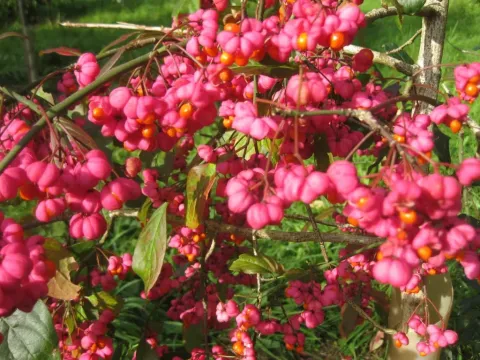
Hill euonymus
Euonymus clivicola
Hill euonymus (Euonymus clivicola) is a deciduous shrub belonging to the Celastraceae family. It originates from the mountain regions of East Asia, adapted to thrive in temperate climates with specific slope soil conditions.
What the section contains
Hill euonymus
The plant requires fertile, well-drained loamy soils to reach its full potential. While it can adapt to various soil types, maintaining a neutral to slightly acidic pH level is optimal for nutrient absorption and healthy root development.
In terms of light exposure, the species prefers semi-shaded areas. Direct harsh sunlight, especially in mid-summer, can lead to leaf scorch, while dense shade often results in weaker growth and loss of autumn foliage coloration.
Water management is critical during the initial establishment period. Regular irrigation is necessary to prevent drought stress, although mature plants exhibit moderate tolerance once their deep root systems are fully developed.
Standard agronomic practices include seasonal pruning to maintain a balanced canopy structure and the application of balanced NPK fertilizers in early spring to support the vigorous growth cycle.
The primary pests affecting this shrub are aphids and spider mites, which typically colonize the underside of leaves. Systemic insecticides should be employed if infestation thresholds are exceeded to maintain plant vigor.
Euonymus scale is another significant threat, capable of weakening branches by draining sap. Monitoring the bark for small, bump-like structures is essential for early intervention and effective control.
Fungal pathogens such as powdery mildew can be managed by ensuring adequate airflow through regular pruning. Removing infected plant debris from the base of the shrub is a standard sanitary measure.
Root rot, induced by waterlogging, remains the most dangerous threat to the plant's survival. Maintaining proper soil structure and preventing standing water are the best preventative strategies against subterranean fungi.
Integrated Pest Management (IPM) techniques, including the use of neem oil or horticultural soaps, are recommended to minimize chemical impact while ensuring the long-term health of the ornamental stand.