
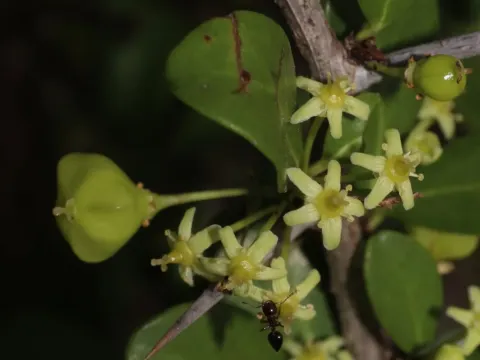
Gymnosporia
Gymnosporia (Wight & Arn.) Benth. & Hook. f.
Gymnosporia is a genus of evergreen shrubs and small trees belonging to the Celastraceae family. These plants are known for their dense foliage and are often characterized by the presence of thorns on their stems.
What the section contains

Gymnosporia
The natural range of the genus encompasses various tropical and subtropical regions across Africa, Asia, and Australia. Gymnosporia thrives in warm environments and lacks cold tolerance, which limits its outdoor cultivation to frost-free climatic zones.
The optimal soil profile for Gymnosporia includes well-draining, sandy, or loamy substrates with a balanced nutrient content. The plant requires a sunny location to maintain its aesthetic appeal and proper branching structure.
Watering requirements are moderate. While established plants demonstrate significant drought tolerance, consistent moisture is essential during the active growing phase to prevent premature leaf drop.
Cultivation practices involve regular pruning to control growth and maintain the desired shape, especially when the plants are used as decorative hedges or protective screens in urban landscapes.
Common pests affecting Gymnosporia include scale insects and mealybugs, which tend to congregate on stems and undersides of leaves, causing structural damage and stunted growth.
Fungal pathogens such as leaf spot are frequently observed in areas with high humidity. Proper airflow through the canopy is critical to prevent the colonization of leaves by these harmful fungi.
Root rot represents the most significant threat to the plant's longevity, usually resulting from overwatering or inadequate soil drainage, which depletes the root system of oxygen.
Integrated pest management, involving mechanical removal of visible pests and the use of targeted horticultural oils, is highly effective in controlling infestations during early stages.
Agronomic monitoring of leaf coloration and stem integrity serves as a primary tool for early detection of potential health issues, allowing for rapid intervention before the spread of infection.