
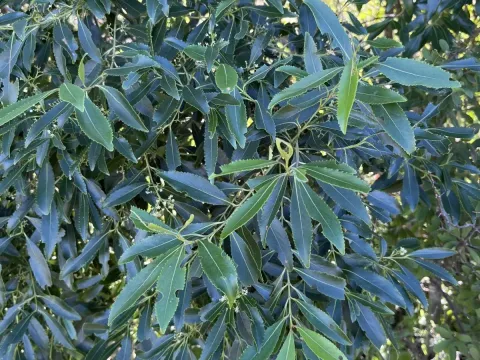
Khat
Catha
Propagation of khat is most often carried out by seeds or cuttings. The seeds of the plant lose their viability quickly, so they should be sown immediately after harvest in a well-drained, loose substrate.
What the section contains
Khat
For successful seed germination, a constant temperature in the range of 20 to 25 degrees Celsius is maintained. It is important to ensure stable soil moisture while avoiding waterlogging, which can lead to embryo rot.
Cuttings are a preferred method for preserving the varietal characteristics of the plant. For cuttings, healthy semi-woody shoots about 10–15 centimeters long are selected and planted in a mixture of peat and perlite.
During vegetative propagation, phytohormones are used to stimulate root formation, which significantly increases the survival rate of the seedlings. The rooting process usually takes three to six weeks under high humidity.
Once the seedlings are strong, they are transplanted into individual containers or open ground if the regional climate allows for year-round cultivation.
Khat (Catha edulis) is an evergreen shrub or small tree belonging to the Celastraceae family. In its natural habitat, the plant can reach a height of 2 to 5 meters, and up to 10 meters under ideal conditions.
The crop prefers a moderately hot climate with sufficient sunlight. The optimal temperature range for active vegetative growth is between 18 and 30 degrees Celsius.
The plant does not have specific, strict soil requirements, but it grows best in well-drained loam or sandy soils with a neutral pH. The absence of substrate salinization is an important factor.
The plant has moderate drought tolerance, which allows it to adapt to seasonal fluctuations in rainfall in mountainous regions. However, regular irrigation during active growth periods is necessary for high-quality leaf yield.
In its natural range, which covers parts of East Africa and the Arabian Peninsula, khat grows at altitudes up to 2500 meters above sea level, where night temperatures can be quite cool.
The yield of the crop is determined by the intensity of harvesting young leaves and shoots. In agricultural practice, regular pruning of bushes is carried out to stimulate the growth of new side branches.
The first commercial harvest from young plants can be obtained when they reach the age of three to four years. Harvesting is selective and manual, removing only the most tender and fresh top leaves.
The intensity of harvesting depends on agronomic care and the application of nitrogen fertilizers, which promote green mass accumulation. With proper harvesting practices, a bush can remain productive for several decades.
An important factor affecting the final volume of production is the planting density on the plantation. An optimal plant layout ensures light and air access to all parts of the canopy.
After harvesting, the product requires immediate processing or transportation, as the leaves quickly lose their properties upon drying, reducing their market value.
The main pests for khat are spider mites and mealybugs, which attack the leaves under conditions of insufficient air humidity and high temperatures.
Fungal diseases, such as root rot, occur primarily due to improper irrigation regimes and poor soil drainage. This condition often leads to the death of the plant in a short time.
To control insect pests on plantations, contact and systemic insecticides are used, along with biological control methods, including the use of natural entomophages.
Disease prevention consists of adhering to agronomic standards: timely thinning of the canopy to improve ventilation and avoiding waterlogging of the root zone.
Young seedlings can suffer from soil-borne pathogens, so the use of sterilized substrates when growing in nurseries is a critical stage of the technology.
Harvesting khat is a labor-intensive process that requires high precision. Harvesters select only apical shoots with leaves that have reached optimal size.
Harvesting is typically carried out in the early morning hours, while the air temperature remains low, to preserve maximum freshness and sap content in the leaf tissues.
After harvesting, the produce is bundled into small batches and tightly packed for transport. It is important to minimize the time between harvesting and delivery to the consumer.
The use of special packaging materials that maintain humidity inside the bundle allows slowing down the wilting processes of the harvested raw material.
At the end of the harvest season, plantations undergo sanitary pruning, which helps the shrubs recover before the next growing season and shapes a canopy that is more convenient for harvesting.