
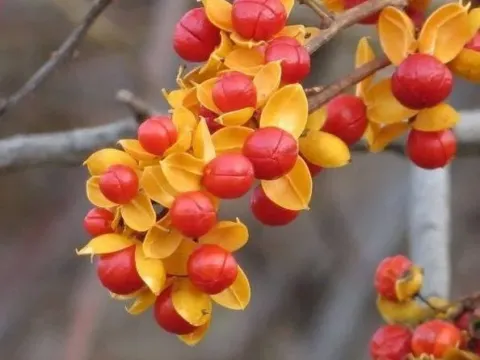
Celastrus angulatus
Celastrus angulatus
Celastrus angulatus, known as the angular bittersweet, is a woody climbing vine belonging to the Celastraceae family. Native to the mountainous regions of China, this plant is well-adapted to varied forest environments where it uses woody supports to reach the forest canopy.
What the section contains
Celastrus angulatus
The cultivation of this vine requires well-drained, fertile soil with moderate moisture retention. While the plant can tolerate a variety of soil types, it performs best when provided with nutrient-rich substrates and sufficient space for its root system to expand during the establishment phase.
Regarding sunlight, Celastrus angulatus prefers full sun to partial shade. In areas with extremely hot summers, partial shade is beneficial to prevent leaf scorching and excessive water loss, whereas full sun encourages more vigorous growth and a higher density of foliage.
Agricultural management requires sturdy support structures such as pergolas, trellises, or fences. The plant exhibits rapid growth, often extending its stems significantly in a single season, necessitating periodic pruning to maintain its shape and manage its overall size within the landscape.
The economic value of this species is primarily centered on its secondary metabolites. Research indicates that the plant contains specific compounds that exhibit strong insecticidal properties, making it an object of study for botanical pest management strategies alongside its role in ornamental landscaping.
The primary insect pests affecting Celastrus angulatus include aphids, which may cluster on new, tender shoots. These pests can be managed through early intervention, including the use of horticultural oils or targeted biological controls during the peak infestation periods of late spring.
Fungal pathogens such as powdery mildew may appear if the plant is grown in areas with poor airflow and high humidity. Maintaining proper spacing and ensuring the plant has adequate ventilation around its stems significantly reduces the likelihood of these common fungal infections.