
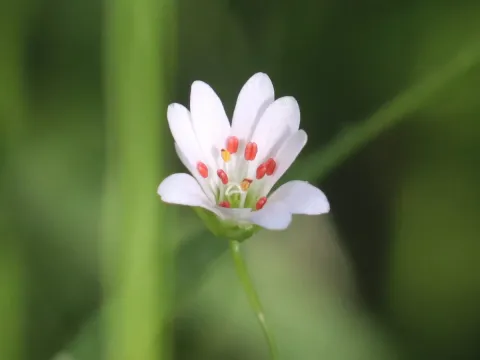
Marsh stitchwort
Stellaria palustris
Marsh stitchwort (Stellaria palustris) is a perennial herbaceous plant belonging to the Caryophyllaceae family. In agricultural and botanical contexts, it is known for its preference for wetland habitats, often appearing in damp meadows and along riparian zones.
What the section contains
Marsh stitchwort
This species is native to temperate regions across Eurasia. It thrives in soils characterized by constant moisture or periodic flooding, making it a reliable bioindicator for poorly drained or seasonally wet lands within an agricultural landscape.
Botanically, it features slender, creeping rhizomes that allow for rapid vegetative expansion. The stems are typically weak and sprawling, reaching lengths up to 60 centimeters, while the flowers are distinct with white, deeply bifid petals arranged in lax cymes.
The plant demonstrates a significant ecological requirement for high soil fertility and sustained moisture levels. It is highly adapted to neutral or slightly acidic soil conditions and can tolerate the physical stress of riparian environments.
Management of this species in fields requires consistent monitoring of moisture levels. Since it prefers areas with high water tables, improving drainage is often the most effective method to naturally decrease the presence of this plant in cultivated areas.
Marsh stitchwort is susceptible to various fungal pathogens that thrive in high-humidity environments. Leaf spot diseases are common, often appearing during periods of prolonged precipitation or in stagnant air conditions within dense foliage.
Pests that frequently impact this species include various beetle larvae and mites, which can cause significant foliar damage. While rarely fatal to the plant, these pests contribute to a reduction in its overall biomass and spread.
From an agricultural standpoint, the primary threat is the plant's ability to outcompete desirable forage grasses. Its rapid rhizomatous growth enables it to form dense mats, which can significantly reduce the quality and yield of hay or pasture land.
Control strategies involve a combination of mechanical and cultural practices. Regular deep plowing and cultivation help to break up the extensive rhizome network, effectively suppressing the plant's regeneration capability after initial infestation.
Chemical control, when necessary, involves the application of selective herbicides targeting broad-leaved weeds. However, due to the plant's affinity for water, users must adhere to strict environmental regulations regarding herbicide use near aquatic areas.