
Reference · Crops
Lychnis
Lychnis
Lychnis seeds are sown in open ground primarily in spring, during April or May, when the soil has warmed up sufficiently. Late autumn sowing in October is also possible, allowing the seeds to undergo natural stratification for more uniform germination.
9
items
What the section contains
 Jupiter's flower
Lychnis flos-jovis
Jupiter's flower
Lychnis flos-jovis
 Lychnis arkwrightii
Lychnis arkwrightii
Lychnis arkwrightii
 Lychnis gracillima
Lychnis gracillima
Lychnis gracillima
 Lychnis hybrids
Lychnis hybrids
Lychnis hybrids
 Lychnis kiusiana
Lychnis kiusiana
Lychnis kiusiana
 Lychnis wilfordii
Lychnis wilfordii
Lychnis wilfordii
 Maltese cross
Lychnis chalcedonica
Maltese cross
Lychnis chalcedonica
 Miquel's Lychnis
Lychnis miqueliana
Miquel's Lychnis
Lychnis miqueliana
 Ragged-robin
Lychnis flos-cuculi
Ragged-robin
Lychnis flos-cuculi
Marketplace
Products in this section · 1
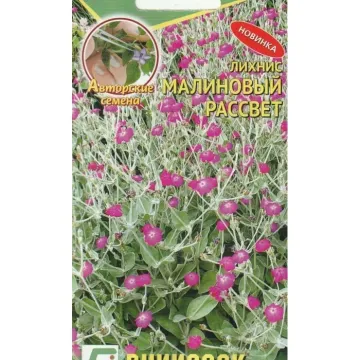
Lychnis
When using a seedling method, sowing is carried out in March in trays with a light substrate. Seedlings are pricked out at the two-true-leaf stage and transplanted to their permanent garden location in June, maintaining a spacing of about 30–40 centimeters between plants.
The crop shows excellent germination rates when surface-sown or lightly covered with a thin layer of sand. The soil for sowing must be loose, well-drained, and kept moderately moist during the germination stage.
To accelerate the germination process at home, pre-soaking in growth stimulants is recommended. Seedlings typically appear at a soil temperature of +18...+20 degrees Celsius within two to three weeks.
Once the first true leaves appear, it is essential to provide the plants with sufficient light to prevent etiolation (stretching). Timely thinning of seedlings promotes the formation of a robust root system and a healthy growth habit.
Lychnis belongs to the Caryophyllaceae family and is an herbaceous perennial plant. In its natural environment, its range covers the temperate regions of the Northern Hemisphere, where the culture grows in meadows and woodland edges.
The plant prefers well-lit areas, as shade reduces stem strength and results in less abundant flowering. It is quite demanding regarding solar intensity for the full accumulation of nutrients.
Soils should be fertile, light, and have a neutral or slightly alkaline pH. Stagnant moisture is detrimental to the root system, so on heavy clay soils, it is mandatory to provide a drainage layer of sand or gravel.
The crop exhibits high winter hardiness, with most species capable of withstanding significant freezing temperatures without cover. However, young specimens in their first year of life should be mulched with peat or dry leaves for frost protection.
During the active vegetation period, Lychnis requires moderate watering, especially in dry summer months. It is important to avoid waterlogging, as high humidity levels in both air and soil trigger fungal diseases of the root collar.
The primary threats to Lychnis crops are fungal diseases, such as root rot and leaf spot. These develop when moisture regimes are disrupted and air circulation between plants is poor.
Among pests, aphids and leaf rollers cause the most damage by feeding on the sap of young leaves and buds. Preventive treatments with broad-spectrum insecticides allow for minimizing losses at the first sign of infestation.
Nematodes can also attack the root system, leading to stunted growth and yellowing of the aerial parts. In case of mass infection, the soil must be disinfected, and heavily damaged specimens should be entirely removed from the site.
To prevent the spread of rust, it is important to practice crop rotation and avoid overcrowded plantings. Timely weeding reduces the risk of pathogen transmission and improves the microclimate in the garden bed.
Proper care, including soil cultivation and deadheading, significantly increases the plant's natural immunity. Strong and healthy plants are much better at resisting insect attacks and the development of pathogenic microorganisms.
The horticultural use of Lychnis is primarily concentrated in ornamental gardening, where it is valued for its long-lasting and striking bloom. In landscape design, it is frequently used to create mixed borders and rock gardens.
Seed collection is performed as the pods mature, once they turn a brown color. It is crucial not to miss the moment the fruit splits to avoid self-seeding, which could lead to the uncontrolled spread of the culture.
Cut Lychnis flowers keep well in water, making them popular in commercial floriculture for bouquet arrangements. For maximum freshness, the stems should be cut early in the morning when the plants are fully hydrated.
The plant possesses medicinal properties; in traditional medicine, it is used as an anti-inflammatory and expectorant agent. However, use for medicinal purposes requires caution and prior consultation with specialists.
Autumn cleanup of the remaining aerial parts is conducted after the stems have dried completely at the end of October. This measure is necessary to prepare the plot for winter and to prevent the carryover of diseases to the next season.