
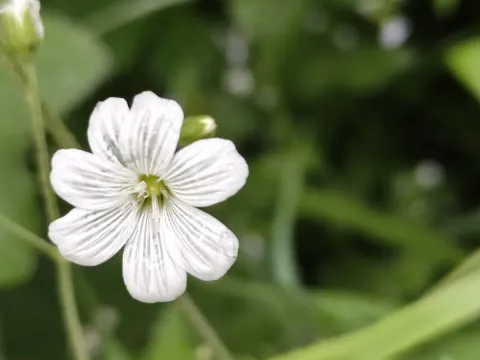
Lesser-flowered mouse-ear
Cerastium pauciflorum
Cerastium pauciflorum, known as the lesser-flowered mouse-ear, is a perennial herbaceous plant belonging to the Caryophyllaceae family. It is naturally found in temperate forests and woodland edges, where it creates thick ground covers. The species is valued for its hardiness and adaptability to various environmental conditions.
What the section contains
Lesser-flowered mouse-ear
Propagation is typically achieved through seeds sown in early spring as soon as the soil becomes workable. Seeds should be sown on the surface and barely covered with fine soil, as light is a critical factor for their germination. Consistent moisture must be maintained during the initial stages of seedling development.
Autumn sowing is also a viable strategy, allowing seeds to undergo natural cold stratification during the winter. This practice often results in more vigorous and early spring growth, helping the crop establish its root system before the arrival of warm summer temperatures.
In terms of spacing, a row distance of 25-30 centimeters is recommended for optimal plant health. Proper spacing facilitates adequate airflow between individual plants, which significantly reduces the risk of humidity-related fungal issues during the peak growth season.
Vegetative propagation by division of established clumps is highly effective for larger plantings. This task is best performed in the late summer or early autumn, ensuring the divisions have enough time to establish themselves before the onset of the first frost.
This species thrives in well-drained, porous soils with a preference for sandy or loamy substrates. Heavy clay soils that retain excessive moisture should be amended with organic matter or gravel to improve permeability, as the roots are sensitive to waterlogging.
Cerastium pauciflorum is a light-demanding plant and requires full sun or very light partial shade to maintain its density and flowering potential. In shaded environments, plants tend to become leggy and lose their compact, low-growing growth habit.
The plant demonstrates remarkable tolerance to drought once established, thanks to its efficient root system. While it prefers moderate watering during the flowering phase, it is well-equipped to handle short periods of dryness in typical garden or field settings.
Soil pH levels should ideally be neutral or slightly alkaline. In acidic soil conditions, the addition of lime or dolomite can improve nutrient uptake and overall plant vigor, leading to healthier foliage and more abundant blooms throughout the season.
Routine maintenance involves clearing the surrounding area of invasive weeds that may compete for nutrients and light. A thin layer of inorganic mulch, such as crushed stone, can help maintain soil moisture while protecting the lower stems from rot.
Root rot is the most significant threat to this crop, particularly in poorly drained or overly damp conditions. Ensuring that the soil structure is loose and well-aerated is the primary method for preventing these pathogen-related complications.
Powdery mildew may manifest as a white film on the leaves during periods of high humidity and poor ventilation. Pruning affected stems and applying appropriate fungicides can help mitigate the spread and restore the plant to a healthy state.
Spider mites are common pests that may infest the foliage during hot and dry spells. Monitoring the undersides of leaves is essential for early detection, and the use of targeted miticides or insecticidal soaps can be employed to manage pest populations effectively.
Root-knot nematodes can cause stunted growth and yellowish foliage by disrupting the root system's function. The best defense is to source disease-free stock and maintain a rigorous crop rotation schedule to prevent soil-borne pathogens from accumulating.
Slugs and snails can cause cosmetic and structural damage, particularly to young, tender shoots. Physical barriers, such as sharp gravel or specialized trapping, are effective ways to protect the plants from these mollusks without resorting to widespread chemical use.