
Mountain snowberry
Symphoricarpos oreophilus
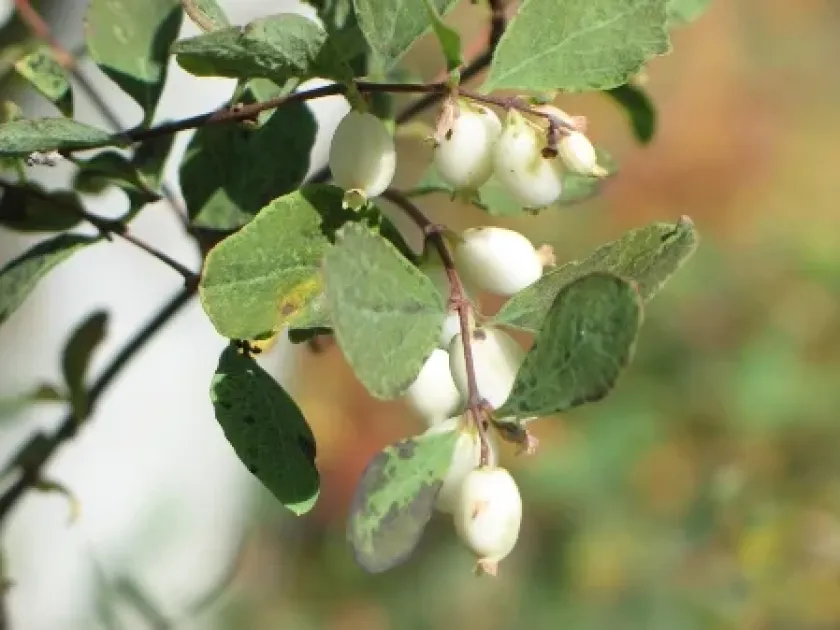
Description
Growing requirements
Mountain snowberry (Symphoricarpos oreophilus) is a deciduous shrub belonging to the Caprifoliaceae family, native to mountainous regions in North America. It is characterized by its adaptability to various elevations and its resilient woody stems.
This shrub thrives in well-drained, nutrient-poor, or rocky soils, making it an excellent choice for reclamation sites or gardens with challenging soil conditions. It possesses a significant tolerance to cold temperatures and typical mountain climate fluctuations.
For successful cultivation, mountain snowberry requires full sun to partial shade. Adequate drainage is the most critical factor for success, as the roots are sensitive to waterlogged environments which may hinder growth or cause root rot.
Maintenance involves routine pruning to promote vigorous growth and remove dead wood. While it is hardy and requires minimal intervention, light fertilization during the early spring growth flush can improve berry production and foliage density.
In terms of хозяйственное usage, it is highly valued in environmental restoration and landscaping. Its ability to colonize slopes makes it an essential plant for erosion control, while its berries provide an important food source for local wildlife.
Main diseases and pests
Mountain snowberry is generally resistant to many pests and diseases. However, in enclosed or overly humid settings, it may be susceptible to powdery mildew, which manifests as a white coating on the leaves and stems.
Occasional infestations of aphids or spider mites can occur, particularly during hot and dry spells. Effective management includes monitoring for early signs of activity and ensuring proper spacing between plants to allow for adequate air circulation.