
Hybrid snowberry
Symphoricarpos hybrids
Description
Growing requirements
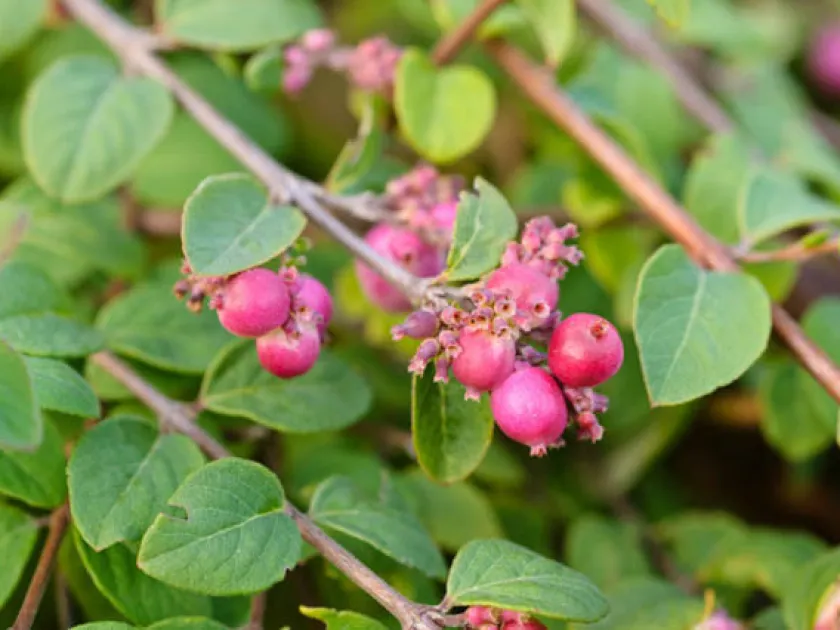
Hybrid snowberry (Symphoricarpos × chenaultii) belongs to the Caprifoliaceae family. It is a robust deciduous shrub valued for its ornamental berries and graceful growth habit.
The plant thrives in a wide range of soil types, provided they are well-drained. While it tolerates shade, it produces more flowers and fruit when planted in full sun or partial shade.
It is highly adaptable to various climatic zones and demonstrates significant cold hardiness. This resilience makes it a popular choice for northern gardens and urban landscaping projects.
Agrotechnical maintenance focuses on spring pruning to remove dead wood and encourage vigorous new growth. It is a low-maintenance shrub that rarely requires additional irrigation once established.
In landscaping, it is used extensively for hedging and erosion control on slopes. Its dense branching structure provides excellent ground cover and winter interest when the berries persist on the stems.
Main diseases and pests
Hybrid snowberry is generally resistant to most common garden diseases, although powdery mildew can occasionally appear in stagnant or overly humid conditions.
Aphids are the most typical pests found on this plant. They tend to cluster on new shoots during the spring, which may hinder the development of the foliage.
Integrated pest management, including monitoring and biological control, is usually sufficient to manage any potential outbreaks without heavy chemical use.
To ensure long-term plant health, maintain proper spacing during planting to facilitate adequate air movement, which minimizes the risk of fungal infections.
Overall, the plant is quite hardy and requires minimal intervention if provided with a suitable site and proper initial care during the planting phase.