
Western snowberry
Symphoricarpos hesperius
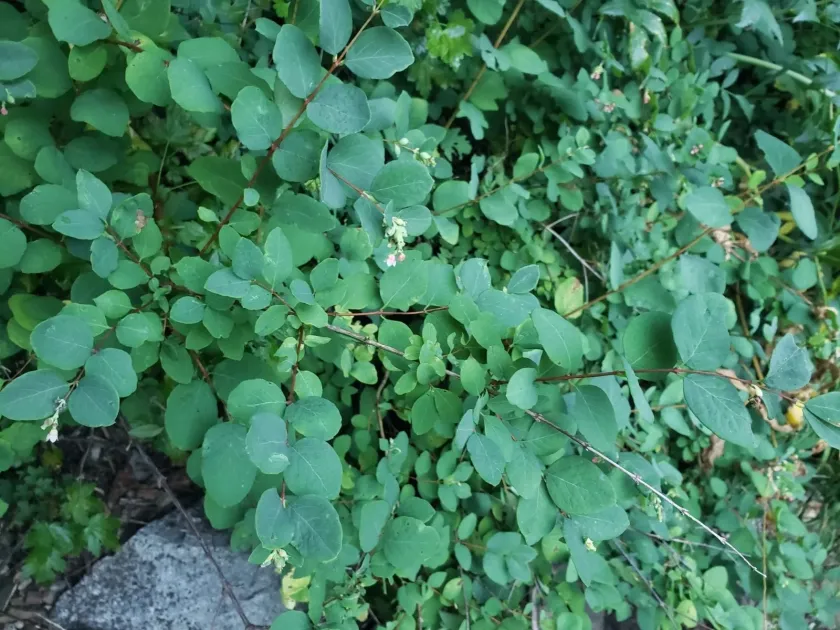
Description
Growing requirements
The Western snowberry (Symphoricarpos hesperius) is a deciduous shrub belonging to the Caprifoliaceae family. Native to western North America, this plant is well-adapted to a variety of habitats, ranging from wooded hillsides to open valleys.
The plant is recognized for its exceptional durability and soil adaptability. It thrives in well-drained loamy soils but displays remarkable resilience in rocky or compacted ground, making it an excellent choice for erosion control and hardy landscaping.
Regarding climate requirements, the Western snowberry prefers full sun to partial shade. While it can survive in shaded areas, full sun exposure is essential for maximizing fruit production and maintaining the dense, attractive structure of the shrub.
Maintenance involves regular pruning to manage its spreading growth habit. The plant propagates through vigorous root suckers, so it requires periodic containment to ensure it does not dominate smaller garden spaces or crowd out surrounding perennials.
The species is highly drought-tolerant once established. However, young plants benefit from supplemental watering during the first growing season, and occasional fertilization in early spring helps maintain vigorous foliage and robust growth.
Main diseases and pests
The Western snowberry is generally resistant to most pests and diseases. However, in humid environments with poor air circulation, it may be susceptible to powdery mildew, which appears as a white dusty coating on the leaves.
Aphids can occasionally colonize new terminal growth. While usually not fatal to the plant, significant infestations can distort new leaves. Natural predators or mild insecticidal soaps are typically sufficient to manage these populations.
Root rot is a potential risk only in poorly drained soils. Ensuring that the planting site has adequate slope or a gravel-based drainage layer is the primary defense against soil-borne pathogens in this resilient species.
Scale insects can occasionally affect the woody stems. Regular monitoring of the bark and branches allows for early detection, enabling the gardener to wipe them away or apply dormant oil treatments during the winter months.
Overall, the Western snowberry remains one of the lowest-maintenance shrubs for native garden projects. Its inherent toughness allows it to survive seasonal stresses with minimal human intervention, provided it is planted in an appropriate location.