
Roundleaf snowberry
Symphoricarpos rotundifolius
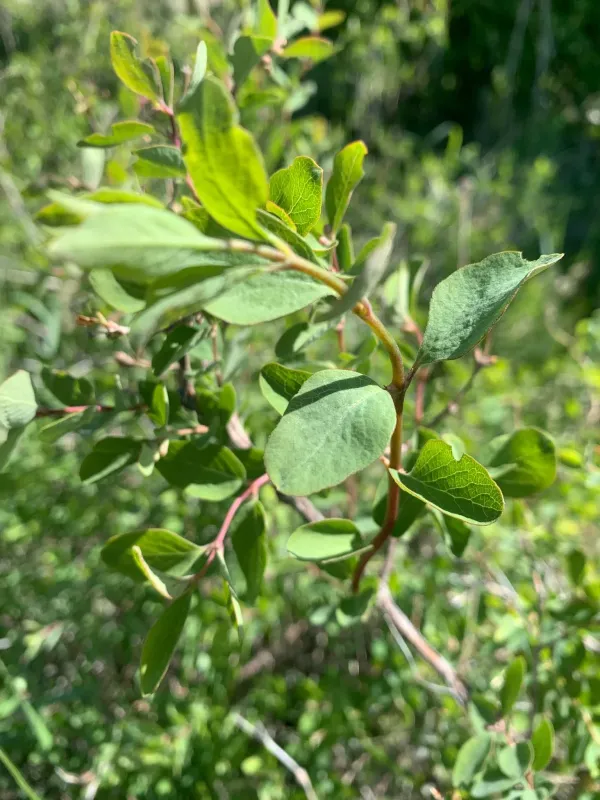
Description
Growing requirements
The roundleaf snowberry (Symphoricarpos rotundifolius) is a deciduous shrub belonging to the honeysuckle family, Caprifoliaceae. Native to the western parts of North America, it is commonly found in mountain shrublands and forest edges.
This shrub is highly valued for its drought tolerance and ability to thrive in poor, rocky soil conditions. It prefers full sun to partial shade and demonstrates remarkable resilience to various soil types, including those with high alkalinity.
For optimal establishment, the species requires well-drained soil and adequate spacing to allow for airflow. It is a hardy plant capable of enduring cold winters, making it suitable for a wide range of climatic zones across temperate regions.
Cultivation practices primarily involve minimal maintenance, such as occasional pruning to manage the shrub's shape and density. It propagates easily through seed germination or vegetative cuttings, which contributes to its popularity in restoration projects.
The primary use of Symphoricarpos rotundifolius is in ornamental landscaping and soil stabilization. Its persistent white berries and small, rounded leaves provide aesthetic value, while its root system helps prevent erosion on steep slopes.
Main diseases and pests
The plant generally possesses high resistance to diseases; however, powdery mildew may appear if the site lacks sufficient ventilation. Ensuring correct planting density and proper site selection significantly reduces the likelihood of such fungal issues.
Insect pests such as aphids and spider mites can occasionally affect the foliage. Routine monitoring during the growing season is recommended, with horticultural oils or insecticidal soap being effective interventions if an infestation occurs.