
Creeping snowberry
Symphoricarpos mollis
Description
Growing requirements
The creeping snowberry (Symphoricarpos mollis) is a deciduous shrub species belonging to the Caprifoliaceae family. Native to western North America, this plant is primarily found in shaded woodland environments. It is characterized by its prostrate habit, making it an excellent candidate for ground cover in gardening and land management.
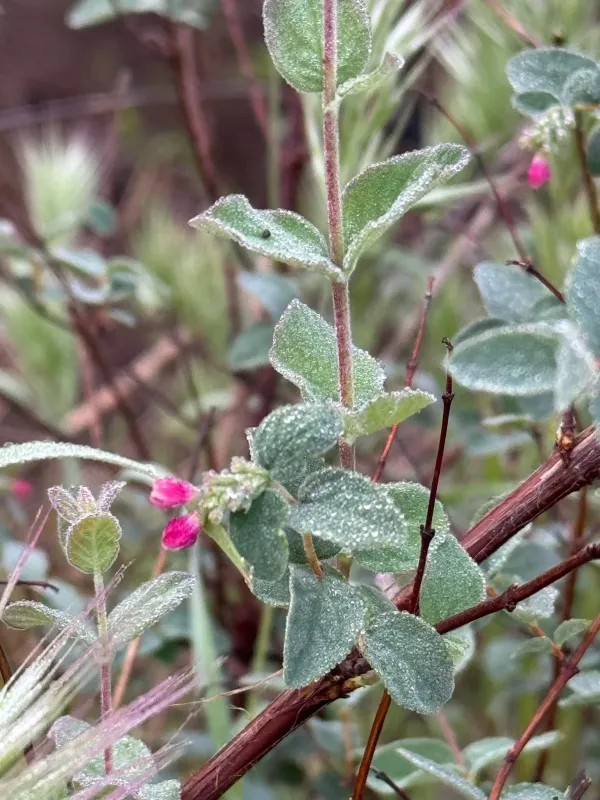
Botanically, the plant features small, opposite leaves that are often softly pubescent, hence the specific epithet 'mollis'. The flowers are small, bell-shaped, and usually pale pink or white. These blooms develop into white, berry-like fruits that persist into the late autumn, providing food for local wildlife.
The cultural requirements for Symphoricarpos mollis center on its preference for semi-shaded locations. It thrives in soils that are rich in organic matter and possess good drainage properties. While it exhibits tolerance to varied conditions, maintaining a consistent moisture level in the soil is beneficial for its foliage development.
Agrotechnical management involves regular pruning to keep the plant within its desired boundaries. Being a low-growing shrub, it is relatively easy to propagate through cuttings or layering. In its native habitat, it integrates well with other woodland species, forming part of a stable forest floor ecosystem.
In terms of хозяйственное использование, this shrub is highly valued for erosion control and slope stabilization. Its spreading roots help hold soil in place. Beyond its ecological function, it is used in ornamental gardening for creating naturalistic border plantings or filling space beneath taller shrubs or trees.
Main diseases and pests
The primary threats to the creeping snowberry include fungal diseases like powdery mildew, which can affect the leaves during humid conditions. Aphids are the most common insect pests that may feed on the tender shoots. Implementing proper spacing and avoiding overhead irrigation can significantly reduce the pressure from these threats.