
Coralberry
Symphoricarpos orbiculatus
Description
Growing requirements
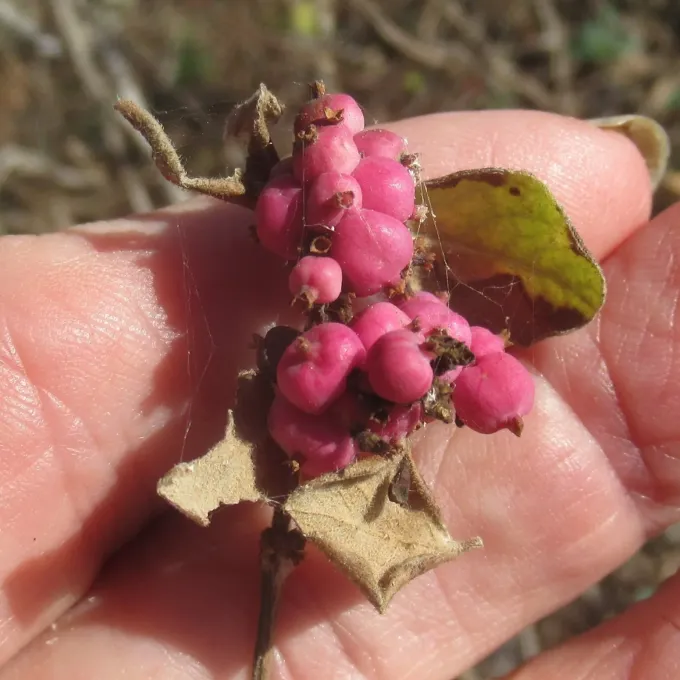
Coralberry (Symphoricarpos orbiculatus) is a deciduous flowering shrub belonging to the Caprifoliaceae family. Native to North America, this plant is valued for its arching branches and attractive clusters of berries that persist through winter.
The shrub is highly adaptable to various lighting conditions, thriving in both full sun and partial shade. It is commonly used in naturalistic landscaping, erosion control on slopes, and as a durable component for urban green spaces due to its resilience.
Regarding soil requirements, it is undemanding and can grow in various soil types, including rocky, sandy, or heavy clay soils. However, it performs best in well-drained, neutral to slightly alkaline soils. It tolerates dry conditions once established.
The species is renowned for its cold hardiness, allowing it to withstand severe winter temperatures without special protection. This makes it a reliable horticultural choice for landscaping in northern climatic zones where hardy vegetation is required.
Cultural practices include periodic pruning to manage size and shape. Because the shrub produces flowers on new wood, pruning should ideally be done in late winter or early spring to encourage vigorous growth and ensure a prolific display of berries in the autumn.
Main diseases and pests
Coralberry is generally considered a disease-resistant plant, requiring very little chemical intervention. Its robust nature makes it a sustainable choice for public parks, highways, and residential gardens where minimal maintenance is desired.
While resistant, the plant may occasionally suffer from powdery mildew if planted in sites with poor air circulation or excessive moisture. Improving spacing between plants and thinning out congested branches will usually mitigate this issue effectively.
Insect pests such as aphids might occasionally appear on young, succulent shoots. However, these infestations are typically minor and rarely require treatment, as natural predators are usually present to control these populations.
Preventive maintenance involves removing dead or diseased wood during the dormant season. Ensuring that the site provides adequate drainage is critical to preventing root rot, which is perhaps the only significant cultural threat to the plant's health.
The use of balanced organic fertilizers in early spring can help strengthen the plant's natural defense systems. Maintaining a layer of mulch helps regulate soil moisture and temperature, fostering a healthy environment for the root system to thrive.