
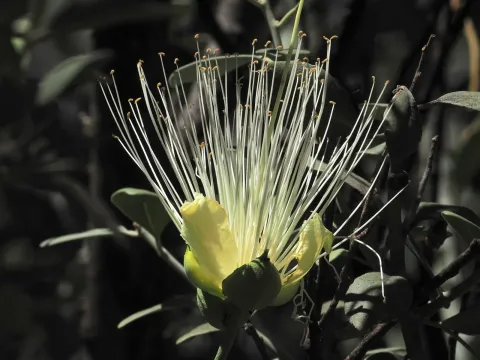
Wild Orange
Capparis mitchellii
Capparis mitchellii, commonly known as Wild Orange or Native Caper, belongs to the Capparaceae family. It is a hardy, drought-tolerant shrub native to the arid and semi-arid regions of Australia.
What the section contains
Wild Orange
The plant thrives in full sun exposure and is highly resistant to heat stress, making it an excellent candidate for agricultural diversification in dryland environments.
Success in cultivation requires well-drained, sandy, or rocky soil profiles. The species is highly sensitive to waterlogging, so soil aeration is a critical factor for healthy root development.
Botanically, it is characterized by leathery, evergreen foliage and a deep, extensive taproot system designed to survive prolonged drought periods common in its native range.
Economic utilization includes the harvesting of its aromatic, edible fruits, which are highly regarded for their unique flavor, as well as the use of the plant in xeriscaping and land restoration projects.
The primary threats to Capparis mitchellii involve fungal infections such as root rot, which are triggered by irrigation mismanagement or poor soil drainage.
Pests including scale insects and aphids may infest new growth, especially in sheltered or overcrowded conditions that restrict airflow around the canopy.
Spider mites can become a significant issue during extremely hot and dry seasons, causing leaf yellowing and reduced photosynthetic efficiency.
Integrated pest management strategies focusing on natural predators and maintaining plant vigor are the most effective ways to control potential infestations.
Proper pruning practices are essential to promote structural integrity and prevent the accumulation of moisture within the foliage, thus reducing disease pressure.