
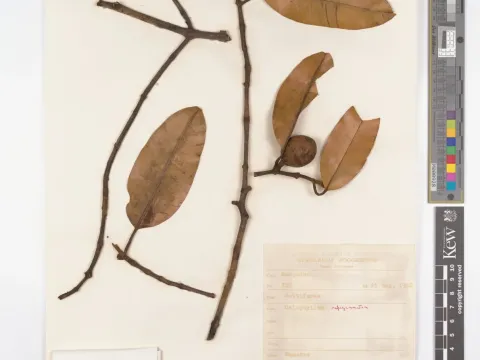
Calophyllum rufigemmatum
Calophyllum rufigemmatum
Calophyllum rufigemmatum is a distinctive tree species belonging to the Clusiaceae family. Known for its specific morphological features, including its characteristic reddish buds, this species is a significant component of tropical forest ecosystems in its native range.
What the section contains
Calophyllum rufigemmatum
The origin of the species is primarily linked to the tropical regions of Borneo. It thrives in lowland and mountainous rain forests where environmental conditions remain stable throughout the year. The tree plays a crucial role in maintaining forest structure and canopy density.
Agricultural success with this species depends on mimicking natural conditions, specifically providing deep, well-draining, and acidic soil profiles. Unlike many industrial crops, this tree requires careful management of light levels, preferring partial shade in its juvenile developmental stages.
Environmental requirements include a consistent tropical climate with high annual rainfall and minimal seasonal variation in temperature. Soil moisture management is vital; the site must provide excellent aeration to prevent the development of root pathogens associated with waterlogging.
The wood derived from this tree is highly valued for its physical properties, such as hardness and durability. It is traditionally used in high-quality furniture making and various construction projects where wood strength is a key requirement for end-use performance.
Fungal pathogens represent the most significant threat to the health of Calophyllum rufigemmatum seedlings. Maintaining optimal planting density is the primary cultural practice used to mitigate risks associated with high humidity.
Stem-boring insects can cause substantial structural damage to adult trees, compromising the timber quality. Integrated pest management strategies are often necessary in managed stands to minimize the impact of these borers.
Competition from fast-growing invasive weeds is a critical factor during the establishment phase of plantations. Mechanical weeding or careful mulching is required to ensure that the trees gain sufficient access to soil nutrients and water.
Environmental degradation, particularly the conversion of primary forest land to commercial use, poses a severe risk to the natural survival of the species, potentially restricting its genetic pool.
Due to the specific ecological niche this tree occupies, climate change poses a long-term threat by potentially altering the rainfall patterns essential for the survival of younger age cohorts in natural and artificial plantations.