
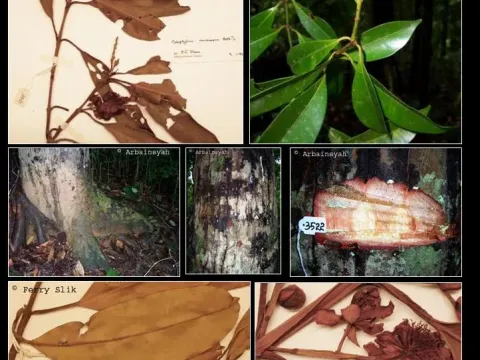
Calophyllum macrocarpum
Calophyllum macrocarpum
Calophyllum macrocarpum is a prominent evergreen tropical tree belonging to the Clusiaceae family. It is native to the rainforest regions of Southeast Asia, thriving in environments characterized by high biodiversity and significant annual rainfall.
What the section contains
Calophyllum macrocarpum
The crop demands a tropical climate with consistent temperatures throughout the year. It does not tolerate thermal fluctuations and thrives best in areas where humidity levels remain elevated, ensuring the continuous metabolic activity of the tree.
Soil requirements for this species include deep, well-draining soils with a rich organic horizon. The tree is sensitive to soil compaction; therefore, maintaining loose soil structure is essential for proper nutrient uptake and root development in commercial plantations.
Agronomic management involves careful monitoring of canopy development to ensure light penetration and air circulation. Young plants often require a nursery stage where they are shielded from extreme direct sunlight until they develop sufficient bark thickness.
Economically, the tree is valued for its dense, durable wood and its seeds, which contain oils with medicinal and industrial applications. Global interest in sustainable sources for bio-based compounds has highlighted the potential of this species for future agroforestry projects.
The primary threats include fungal diseases such as leaf spot and various types of stem rot, which proliferate in stagnant, high-humidity conditions. Maintaining proper spacing and drainage is the most effective cultural method to prevent these infections.
Insects, particularly wood-boring beetles, pose a structural threat to the timber quality. Integrated pest management strategies, focusing on the preservation of natural predators and biological control, are recommended to protect the integrity of the wood.