
Eastern rocket
Sisymbrium orientale L.
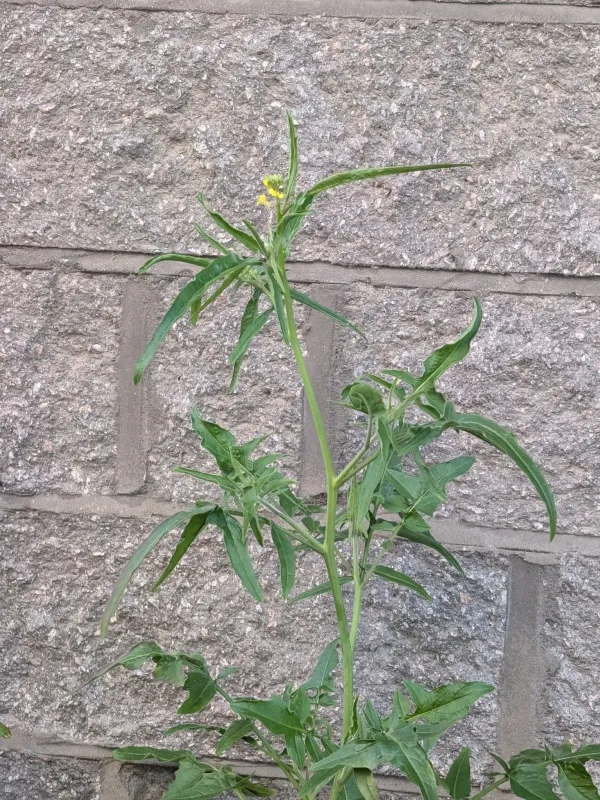
Description
Sowing dates
Eastern rocket (Sisymbrium orientale) is a member of the Brassicaceae family. It is typically sown in autumn for winter annual production, allowing the plants to establish a strong rosette before the winter dormancy.
The optimal sowing time is late August to September, which ensures that seedlings develop deep root systems capable of surviving cold stress and utilizing early spring soil moisture.
For spring-sown crops, planting should occur as soon as the soil is workable, typically when temperatures reach 5–8 degrees Celsius, to maximize the vegetative growth period.
Seed depth is critical for this species, as the small seeds should be buried no deeper than 1–2 centimeters to allow for efficient emergence and high plant density.
The use of precise seeders is recommended to ensure uniform distribution, which is vital for competing against invasive weeds in the early stages of establishment.
Growing requirements
Eastern rocket is known for its remarkable drought tolerance, making it an excellent candidate for cultivation in arid regions or on marginal, sandy, or light soils.
The plant thrives in full sun exposure and well-drained soil environments. It is sensitive to waterlogged conditions, which can lead to root decay and nutrient uptake inhibition.
While it adapts to various soil pH levels, it performs best in neutral to slightly alkaline conditions, avoiding highly acidic soils that impair seedling vigor.
Agricultural management requires the soil to be free of surface crusting, as small seedlings require good aeration for proper gas exchange and root development.
Optimal growth is observed in regions with Mediterranean-type climates, where the seasonal temperature fluctuations promote vigorous vegetative biomass production.
Yield
The green mass yield of the crop ranges from 15 to 25 metric tons per hectare, depending on local rainfall distribution and the intensity of nitrogen application during the bolting phase.
As an oilseed candidate, the crop shows potential for bioenergy production, with yield stability being a key advantage in dry-land farming systems.
In forage systems, the plant produces high-quality biomass, provided it is harvested at the mid-flowering stage when the leaf-to-stem ratio is optimal for animal consumption.
Seed production is highly efficient; a single well-nourished plant can yield thousands of seeds, contributing to high reproductive success in agricultural fields.
Overall yield performance is highly sensitive to competition; keeping the field clean during the first 30 days is essential for reaching the crop's maximum potential.
Main diseases and pests
The most significant pests are flea beetles, which can cause devastating damage to young seedlings by skeletonizing the cotyledons and early true leaves.
Downy mildew is the primary pathological threat, particularly in seasons with high humidity and stagnant air circulation within the canopy, leading to leaf drop.
The cabbage seedpod weevil presents a major challenge during the reproductive phase, as it punctures pods and reduces the overall seed yield and quality.
Clubroot, a soil-borne disease common among Brassicaceae, can persist in the soil for several years and may limit the cultivation of Eastern rocket in short rotations.
- Strategic application of systemic insecticides at emergence.
- Implementing a 3–4 year crop rotation schedule.
- Use of resistant varieties to mitigate fungal disease pressure.
Harvesting
Seed harvest is typically performed using combine harvesters equipped with specialized small-seed kits to minimize shattering and seed loss during the threshing process.
For forage or biomass applications, mowing is done before the stems become woody, ensuring the material retains its nutritional value for ensiling or haying.
Timing the harvest is critical; the crop should be processed as soon as the pods turn brown but before they reach the point of natural dehiscence.
Post-harvest conditioning, including proper drying to reach a 12% moisture content, is necessary to prevent spoilage and mycotoxin formation in stored grains.
Chemical desiccation is an effective management tool to ensure uniform maturity across the field, facilitating a smoother and more efficient harvest operation.