

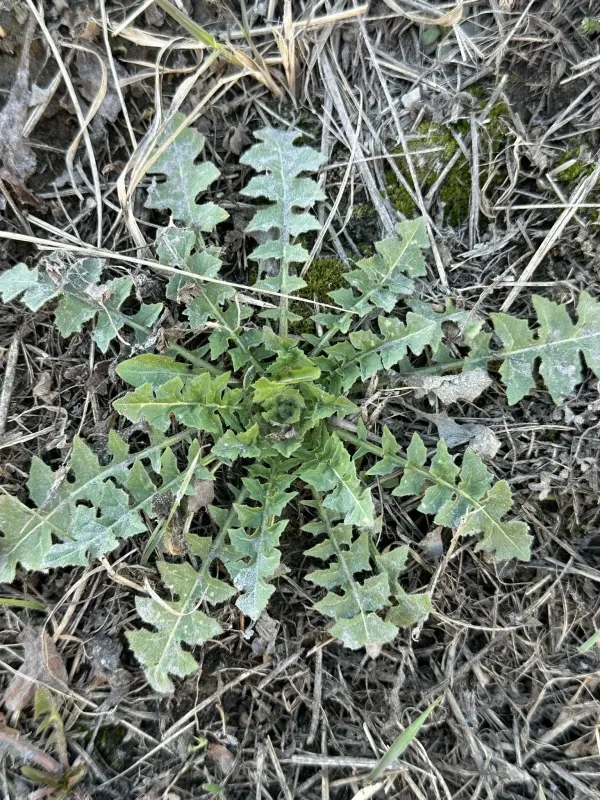
Description
Sowing dates
Sisymbrium loeselii, known as Loesel's hedge mustard, is an annual or biennial plant in the Brassicaceae family. It typically germinates in early spring when soil temperatures reach 4 to 6 degrees Celsius, showing a rapid growth rate from the very beginning.
The plant produces a significant amount of seeds, which can remain viable in the soil for several years. This persistence makes it a common weed in agricultural areas that have been left fallow or are poorly managed during the spring cultivation season.
Winter forms of the plant usually emerge in late summer, forming a basal rosette that remains green throughout the winter. This early establishment gives the plant a competitive advantage over spring-sown crops in the following season.
Seed germination typically occurs at shallow depths, usually within the top 4 centimeters of the soil profile. Consequently, mechanical weeding and shallow tillage are highly effective tools for managing its population during the pre-planting phase of crop production.
The plant undergoes rapid stem elongation as day length increases in late spring. At this stage, the plant allocates substantial energy to seed production, which can lead to rapid infestation if not addressed by timely field maintenance.
Growing requirements
This species is highly adaptable, showing a preference for sunny, open habitats with well-drained soils. It thrives in various soil types, ranging from sandy loams to heavier clays, provided there is adequate light for its development.
Loesel's hedge mustard is notably drought-tolerant, utilizing a deep taproot to access subsoil moisture. This characteristic allows it to persist in arid regions where other, more sensitive plant species might fail to survive during dry spells.
The plant demonstrates a high tolerance to varying pH levels, though it performs optimally in neutral to slightly alkaline soils. Nitrogen availability is a major driver for growth, often resulting in larger, more competitive plants in fertilized agricultural zones.
Winter hardiness is a defining trait of the species, allowing it to withstand extreme cold and frost. This hardiness makes it a particularly problematic weed in winter wheat and other autumn-planted crops, as it competes for nutrients early in the year.
It generally avoids shaded environments, and its growth is significantly stunted in dense, well-managed crop stands. Proper seeding density of the main crop can act as a natural mechanism to suppress the growth and spread of this opportunistic weed.
Main diseases and pests
As a member of the Brassicaceae family, Sisymbrium loeselii serves as an alternative host for many agricultural pests. Crucifer flea beetles, cabbage aphids, and various weevils frequently utilize this plant as a source of food before moving to crops.
The plant is also susceptible to fungal diseases such as downy mildew and white rust. These pathogens can easily spread from the weed to adjacent commercial fields of canola or mustard, resulting in economic losses for the farmer.
Effective management requires an integrated approach, combining cultural practices like crop rotation with chemical intervention. Herbicides targeting broadleaf weeds are commonly used, especially during the early growth stages before the plant begins to bolt.
Manual removal or cultivation is recommended before the plant sets seeds, as the seed bank can be easily replenished by just a few mature plants. Prevention of flowering is the most critical step in long-term field infestation management.
Monitoring for secondary pests and diseases that utilize this plant as a reservoir is crucial for farmers. Keeping field margins clear of this weed helps to minimize the pressure of pests and pathogens on the primary agricultural production.
Reference
Connections · Sisymbrium loeselii
Most often together:
Marketplace
