
Tumble mustard
Sisymbrium altissimum L.
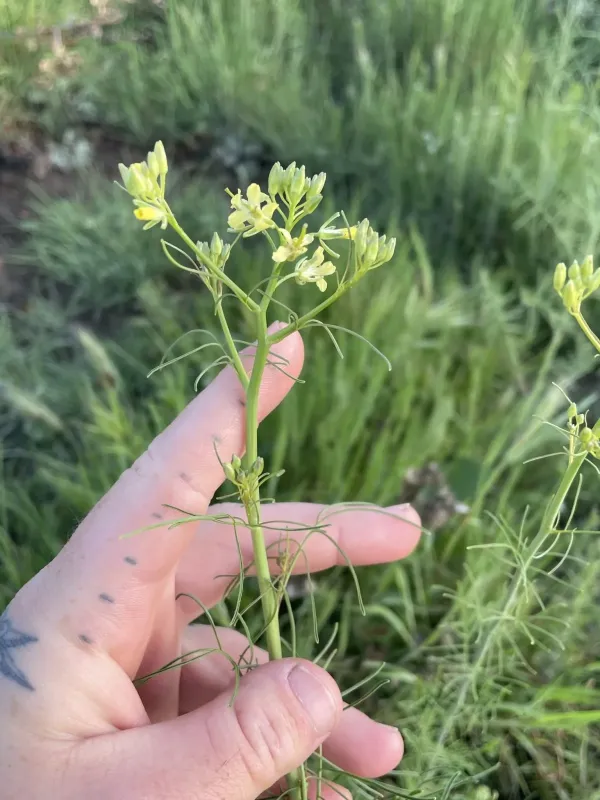
Description
Sowing dates
Tumble mustard is an annual or winter-annual herb that propagates exclusively by seeds. The optimal germination window occurs in early spring when soil temperatures reach 6–10 degrees Celsius, allowing the plant to establish itself before the summer heat intensifies.
For cultivation purposes, seeds should be sown at a shallow depth of 1–2 centimeters. Proper seed-to-soil contact is critical, as the small size of the seeds limits their ability to emerge from deeper soil layers if buried too deeply during mechanical operations.
Winter-annual forms typically germinate in the autumn, forming a robust rosette of leaves that stays close to the ground during winter. This survival strategy provides the plant with an early start in spring, outcompeting other vegetation for essential nutrients and moisture.
Seeding rates should be calibrated to avoid overcrowding. In competitive agricultural environments, high densities can lead to thin, weak stems that are prone to lodging, especially during windy conditions which the plant is evolutionarily adapted to utilize for seed dispersal.
Monitoring soil moisture levels after sowing is essential. If the topsoil dries out too rapidly, germination may be uneven, leading to a staggered development cycle that complicates subsequent management and harvesting operations.
Growing requirements
Belonging to the Brassicaceae family, tumble mustard is highly adaptable and thrives in various environments. It prefers well-drained, light-textured soils such as sandy or gravelly loams, where its deep taproot can penetrate without resistance.
The plant is highly heliophilic, requiring full sun exposure throughout its life cycle. Any degree of shade will significantly retard growth and limit the reproductive output of the plant, making it unsuitable for intercropping with taller, canopy-forming species.
Tumble mustard is exceptionally drought-tolerant. Its physiological traits allow it to maintain cellular functions under low water availability, making it a persistent presence in arid and semi-arid regions where other crops might fail.
Regarding soil fertility, the plant is versatile. While it performs best in soils with balanced nutrients, it is known to colonize disturbed areas with low organic matter, demonstrating a high tolerance for poor-quality agricultural soils.
The ideal climate for this crop includes warm, dry summers which facilitate the drying and "tumbling" mechanism of the plant. This structural adaptation is essential for its natural dispersal, as the dry stalks break off and roll across fields to release seeds.
Main diseases and pests
Like many mustard-family plants, it is susceptible to flea beetles, which can cause severe damage during the seedling stage. These insects feed on leaves, creating "shot-hole" patterns that can stunt plant development in early phases.
Aphid infestations represent a major risk, particularly as the plants approach the flowering stage. Aphids cluster on the inflorescences, sucking sap and transmitting viral diseases that can lead to significantly reduced seed quality and lower yields.
Fungal pathogens such as downy mildew can become an issue under cool, humid conditions. The presence of these fungi is marked by yellow or necrotic lesions on the leaves, which significantly reduce the photosynthetic capacity of the plant.
Root-knot nematodes can also affect the health of the plant by damaging the root system. This becomes a factor in fields with shortened crop rotations, where pathogen loads have built up due to continuous planting of susceptible cruciferous crops.
- Flea beetles
- Aphids
- Downy mildew
- Root-knot nematodes
- White rust