
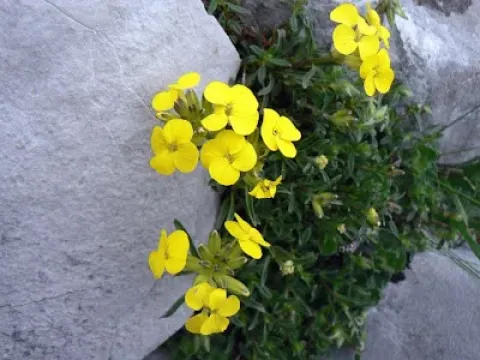
Mountain wallflower
Erysimum jugicola
The mountain wallflower (Erysimum jugicola) is a herbaceous perennial belonging to the Brassicaceae family. It is naturally adapted to rugged, rocky terrains where it thrives in well-drained, nutrient-poor soil conditions.
What the section contains
Mountain wallflower
For successful agricultural production, this crop requires full sun exposure and excellent soil aeration. It is highly sensitive to waterlogged conditions, which makes site selection for cultivation a critical factor for long-term viability.
Climate preferences involve distinct seasonal temperature fluctuations, as the plant possesses inherent cold-hardiness. It excels in temperate regions with low humidity levels, preventing the development of bacterial infections on the foliage.
Agricultural management should focus on maintaining a neutral to alkaline pH balance. Minimal fertilization is recommended, as high nitrogen levels lead to excessive vegetative growth at the expense of secondary metabolites required for pharmaceutical purposes.
The primary utility of Erysimum jugicola lies in its accumulation of cardiac glycosides. These phytochemicals are essential components in the production of specialized heart medication, fueling the market demand for raw plant material.
Cruciferous flea beetles represent the most significant pest pressure for this crop. They can cause rapid defoliation during the early establishment phase, necessitating proactive monitoring and potential biological interventions.
Fungal diseases, such as downy mildew, occur if air circulation around the plants is obstructed. Proper spacing between rows is essential to create a microclimate that prevents moisture accumulation and pathogen spread.
Root rot is often the result of irrigation mismanagement or heavy, compact soils. Implementing a strict drainage protocol is the most effective preventative measure against these soil-borne threats.
Aphids may occasionally colonize the inflorescences, causing stunted growth and lower seed yield. Targeted biological control agents or insecticidal soaps can be used if infestation thresholds are exceeded.
Routine weeding and sanitation of the planting site are critical, as volunteer plants can act as reservoirs for pests and diseases common to the Brassicaceae botanical family.