
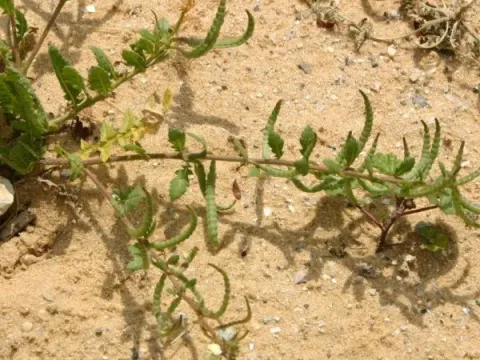
Muricaria
Muricaria
Muricaria (Muricaria prostrata) is an annual herbaceous plant belonging to the Brassicaceae family, primarily native to arid environments. Its growth cycle is naturally synchronized with the rainy season of its home regions.
What the section contains

Muricaria
For cultivation purposes, seeds should be sown in a well-draining, sandy substrate. The optimal planting depth is shallow, ensuring that seeds remain in contact with moisture without being buried too deep, which could inhibit germination.
The sowing phase requires careful monitoring of ambient temperatures. A range of 15 to 20 degrees Celsius is ideal for triggering consistent germination across the sown area.
As the plant develops, it requires significant space to establish its deep taproot system. Overcrowding in the early stages can result in uneven plant height and poor seed pod development.
Due to its rapid life cycle, timely sowing is critical to ensure the plant completes its reproductive phase before the peak of summer heat or drought conditions occur in the field.
Muricaria is a sun-loving plant that demands full exposure to direct sunlight. It cannot tolerate shade, as low light levels significantly reduce the plant's metabolic rate and overall vigor.
The ideal soil conditions are porous and loose, such as sandy or gritty loams. Proper aeration is essential, as the roots are highly sensitive to oxygen deprivation caused by waterlogged soil.
This species is exceptionally well-adapted to drought. It manages water resources efficiently and can thrive in areas where limited irrigation or rainfall is available throughout the growing season.
Soil pH should remain neutral or slightly alkaline. The plant has shown an impressive ability to withstand moderate salinity, making it an interesting candidate for reclaiming marginal desert lands.
Nutrient requirements are generally low. Heavy fertilization is discouraged, as it may lead to an overabundance of foliage at the expense of seed production and can increase plant vulnerability to fungal issues.
Root rot is the most significant threat to Muricaria in agricultural settings. It is almost exclusively caused by poor drainage or excessive irrigation, which damages the root integrity.
Cruciferous pests, such as flea beetles, represent a major concern during the early growth stages. These insects can quickly defoliate young seedlings if left untreated.
Powdery mildew may occur when air circulation is poor or humidity levels fluctuate unexpectedly. This fungus impacts the leaf surface, reducing the plant's ability to produce energy through photosynthesis.
Caterpillars of various moth species can cause damage by feeding on the flowers and developing seed pods. This reduces the final yield and affects the quality of the harvested seeds.
Effective management includes regular scouting of the field to detect pests early. Using preventive measures, such as proper spacing and strict moisture control, is more effective than relying on chemical intervention.
The harvest period for Muricaria begins when the seed pods reach maturity and start to turn brown. It is crucial to monitor the pods closely, as they may naturally dehisce and drop seeds if left on the plant for too long.
Manual harvesting is the most reliable method for small plots to prevent seed loss. The entire plant can be cut when the majority of pods are mature, followed by drying in a controlled, ventilated area.
Mechanical harvesting requires specialized equipment settings to handle the unique, spiky nature of the pods. Care must be taken to minimize breakage during the threshing process to ensure seed quality.
After harvesting, the seeds should be cleaned to remove debris and pod remnants. The seeds are typically small and require fine-mesh sieves to achieve high purity for storage or replanting.
Properly dried seeds can be stored in cool, dry conditions for several months. Maintaining low moisture in storage is essential to prevent degradation and ensure high germination rates for the following season.