
Morisia
Morisia
Sowing Morisia monanthos seeds is best performed in early spring once the risk of severe frost has passed and soil temperature starts to rise.
What the section contains

Morisia
The seeds require a cold period for successful germination, so cold stratification in moist sand or a damp paper towel is highly recommended before planting.
Surface sowing is preferred as the seeds are small and benefit from exposure to indirect light during the initial stage of development.
When starting indoors, use a well-draining grit-based mix to simulate the natural rocky environment where these plants originate.
Transplanting should be done carefully once the seedlings reach a manageable size, ensuring the taproot remains undisturbed to prevent transplant shock.
Morisia is a member of the Brassicaceae family and is native to the island environments of Sardinia and Corsica, thriving in mountain scree and sand.
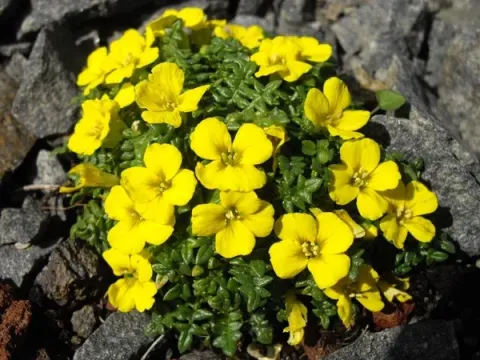
The plant grows in a low-lying rosette of dark green, feathery foliage, producing vibrant yellow flowers that bloom near the ground level.
Optimal conditions involve full sun exposure and extremely well-draining soil, which is essential to prevent root rot during the dormant season.
It prefers alkaline to neutral soil pH and performs exceptionally well in rock gardens, troughs, or alpine houses where drainage can be perfectly managed.
Fertilizing is generally unnecessary and potentially harmful, as Morisia is adapted to nutrient-poor soils and can become leggy if fed too much.
Root rot is the most significant threat to the survival of Morisia, usually triggered by waterlogged soils or high humidity coupled with poor airflow.
Fungal infections can develop if the crown of the plant stays wet for extended periods, especially during the transition from winter to spring.
Slugs and snails are common garden pests that frequently target the succulent-like foliage, requiring protective barriers or baits in damp weather.
Aphids may occasionally attack the flowering stems during the peak blooming season, which can be managed with gentle insecticidal soaps.
To keep the plants healthy, it is vital to ensure good spacing between individuals to allow for proper air circulation around the basal rosettes.