
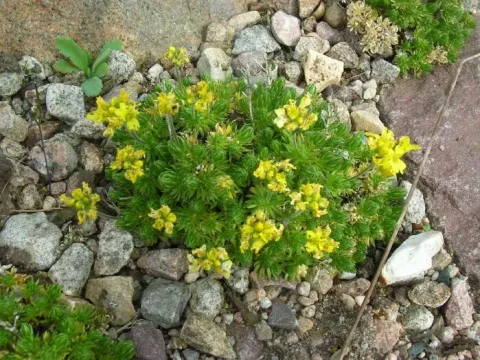
Draba loiseleurii
Draba loiseleurii
Draba loiseleurii is a perennial herbaceous plant belonging to the Brassicaceae family. Originating from the mountainous regions of Corsica, this species is well-adapted to surviving in extreme alpine conditions, forming dense, cushion-like mounds that protect the plant from harsh winds.
What the section contains
Draba loiseleurii
The plant requires a specific climate characterized by cool, well-ventilated conditions and high light intensity. It is extremely hardy and thrives in open, sunny locations where it can receive the necessary sunlight to maintain its compact growth habit and trigger early spring blooming.
Regarding soil requirements, Draba loiseleurii demands excellent drainage. It performs best in poor, rocky, or sandy soils with a neutral to slightly alkaline reaction. The plant does not tolerate heavy or waterlogged soil, which can quickly lead to root decay.
Botanically, it features small, densely packed rosettes of foliage and short stems topped with small yellow flowers. Its growth pattern is slow, making it an excellent candidate for specialized rock gardens where it can grow in cracks and crevices between stones.
The primary use of this culture is decorative. It is highly valued by rock garden enthusiasts for its ability to provide early seasonal color and its structural appearance, which mimics natural high-altitude flora. It is not grown for commercial agricultural production.
The most significant threats to Draba loiseleurii involve moisture-related issues. Fungal infections, particularly root rot, are common if the plant is grown in soil that retains excessive moisture or lacks proper drainage during the dormant season.
Pests are generally not a major concern, but in stagnant or humid environments, aphids might attack the tender flower stalks. Regular inspection and targeted application of organic soap-based sprays can help manage small infestations effectively.
Gastropods, such as slugs and snails, represent a persistent threat to the succulent-like foliage of the plant. Using physical barriers, such as sharp grit or copper tape around the planting site, is an effective strategy to keep these pests away.
Prevention is the best defense against diseases; ensuring that the root neck of the plant remains dry by top-dressing with pea gravel is highly recommended. Good air circulation is crucial to preventing mildew and other leaf surface diseases.
In cases of severe infestation or infection, prompt removal of affected rosettes is necessary to prevent the spread to adjacent plants. Maintaining a clean and well-drained growing environment is the primary requirement for a successful and healthy crop.