
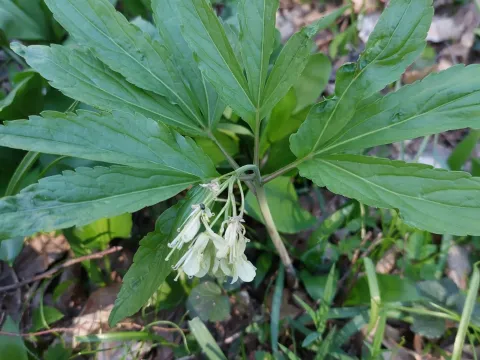
Nine-leaved bittercress
Cardamine enneaphyllos
Nine-leaved bittercress (Cardamine enneaphyllos) is a perennial herbaceous plant belonging to the Brassicaceae family. It is known for its distinct rhizomatous root system, which allows it to spread effectively in favorable forest-like habitats.
What the section contains
Nine-leaved bittercress
Seed propagation is best carried out in the autumn, allowing the seeds to undergo natural stratification through winter, which is essential for uniform germination in spring.
Vegetative propagation involves dividing the creeping rhizomes. This is best done when the plant is dormant, typically in early spring or after the leaves have withered.
When planting rhizome segments, they should be buried at a depth of about 5–7 centimeters in loose, nutrient-rich soil to ensure proper establishment.
Proper spacing is crucial to allow the plant to form a dense ground cover, which is one of its most desirable ornamental traits in garden settings.
This crop thrives in woodland conditions and requires a site with partial to full shade, avoiding direct, harsh sunlight that can scorch the foliage.
The soil should be moist, well-draining, and rich in humus. A soil pH ranging from slightly acidic to neutral provides the most favorable environment.
Regular watering is necessary, especially during the growth phase, as the plant does not tolerate prolonged drought and will quickly show signs of wilting.
Mulching with organic matter, such as leaf mold, helps to retain soil moisture and mimic the natural forest floor environment the plant prefers.
Good air circulation around the plants is important to maintain overall plant health, although it should not be achieved by exposing the plant to drying winds.
The primary threats to Cardamine enneaphyllos include fungal diseases such as powdery mildew or gray mold, often triggered by poor ventilation and high humidity.
Flea beetles, which are common pests of Brassicaceae, can cause significant damage to the leaves by chewing small holes in them during spring.
Slugs and snails can be particularly devastating to the tender foliage and young shoots, often requiring physical barriers or organic deterrents.
Root rot is a common issue if the soil remains waterlogged, which highlights the importance of choosing a well-drained planting site.
Regular monitoring for early signs of infection or pest presence allows for timely management, which usually involves simple mechanical or cultural adjustments.