
Arabis scopoliana
Arabis scopoliana Boiss.
Description
Growing requirements
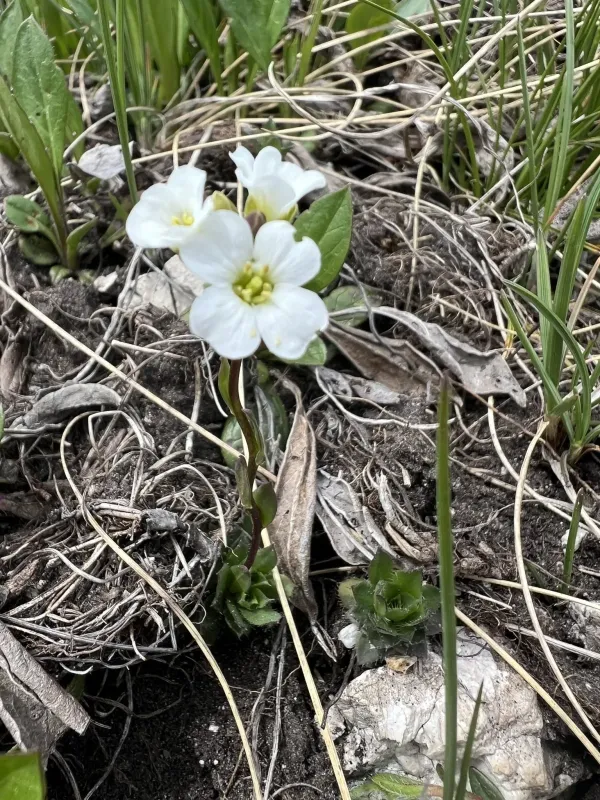
Arabis scopoliana, a member of the Brassicaceae family, is a perennial herbaceous plant native to alpine rocky regions. It is well-adapted to high-altitude environments, which reflects in its compact growth habit and sturdy physical structure.
The plant features basal rosettes of leaves and rising stems that produce small flowers. Its root system is specifically evolved to anchor the plant in rocky crevices and extract nutrients from mineral-rich substrates.
Cultivation of this species requires well-drained, alkaline, and gritty soil. It is intolerant of waterlogged conditions, making proper soil drainage a mandatory requirement for successful plant establishment in a domestic garden setting.
Arabis scopoliana thrives in full sun exposure. Adequate light is essential for maintaining the plant’s dense form and promoting healthy blooming cycles during the late spring season.
Due to its high cold tolerance and compact nature, this species is frequently utilized in rock gardens and scree slopes. It provides excellent ground coverage while maintaining a tidy aesthetic throughout the growing season.
Main diseases and pests
The primary concern when growing Arabis scopoliana is the prevention of fungal diseases such as root rot. These are almost exclusively caused by poor soil drainage and stagnant water around the root zone.
Insect pests, primarily crucifer-feeding insects like aphids or flea beetles, may occasionally infest the foliage. Regular monitoring and maintaining proper air circulation around the plants can significantly reduce the risk of such infestations.