
Arabis procurrens
Arabis procurrens Waldst. & Kit.
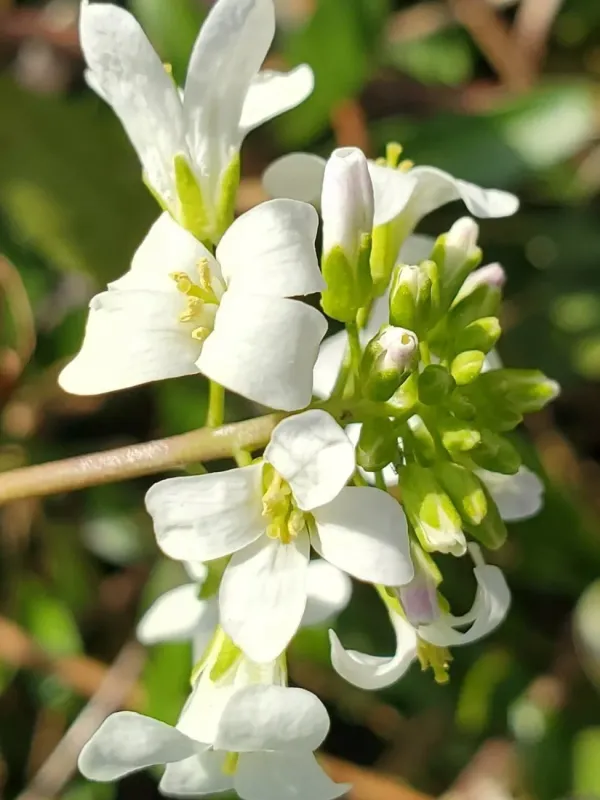
Description
Sowing dates
Sowing seeds of Arabis procurrens is typically performed in early spring, once the soil has warmed up. Direct seeding into the garden beds allows for natural germination as temperatures stabilize.
Indoor propagation using seedling trays is a preferred method for better survival rates. Seeds should be surface-sown and barely covered with fine soil, as they require light for optimal germination.
Seedlings are ready for transplanting once they develop two to three true leaves. Ensuring they are spaced roughly 30 cm apart helps in creating a dense, healthy carpet effect.
Vegetative propagation via division is highly effective in late summer. Dividing established clumps provides immediate coverage and ensures identical offspring.
Cuttings taken during the growing season root easily in well-draining potting medium. Keeping the cuttings under high humidity for the first week accelerates root development.
Growing requirements
Arabis procurrens is a perennial flowering plant belonging to the Brassicaceae family. It is native to the mountainous regions of Southeastern Europe, where it thrives in rocky environments.
The plant is valued for its creeping habit and persistent green foliage. It creates a lush mat that stays attractive throughout most of the gardening season.
It prefers full sun to light shade and demands well-draining, neutral to alkaline soil. It struggles in heavy, waterlogged clay, which can lead to rapid decay of the stolons.
The plant is remarkably hardy, capable of withstanding cold winters typical of alpine regions. Proper soil drainage is essential to prevent freezing water from damaging the root system.
Maintenance involves minimal intervention: removing spent flower stalks after the spring bloom period encourages tidier growth and may induce a secondary flush of development.
Main diseases and pests
Root rot is the most significant threat to Arabis procurrens, usually occurring in areas with poor drainage or stagnant water during the winter months.
Crucifer flea beetles are the most common insect pests associated with this species. They create small pits in the leaves, which can disfigure the plant's appearance.
Powdery mildew can affect the foliage during humid and warm conditions. Improved air circulation around the plants is the most effective preventative measure.
Snails and slugs can be a nuisance for young or newly transplanted specimens. Physical barriers or organic deterrents are recommended in damp environments.
Systemic fungicides are recommended only as a last resort for severe fungal outbreaks. Keeping the planting site clean of dead organic debris significantly reduces pathogen pressure.