
Arends Rockcress
Arabis x arendsii H. R. Wehrh.
Description
Growing requirements
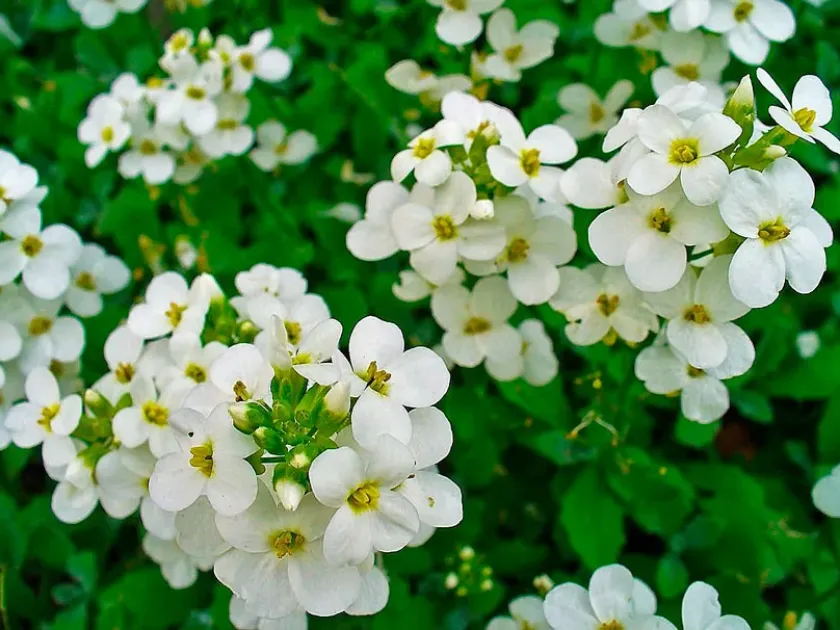
Arends Rockcress (Arabis x arendsii) is a perennial herbaceous plant belonging to the Brassicaceae family. This hybrid, developed by Georg Arends, is widely valued in horticulture for its vibrant spring flowering and low-growing, mat-forming habit.
The botanical characteristics include evergreen or semi-evergreen foliage forming dense rosettes. The leaves are typically small, grey-green, and slightly fuzzy, which provides an attractive texture even when the plant is not in its full blooming phase.
This crop thrives best in full sun exposure. While it is adaptable, it strictly requires well-drained soil; rocky or sandy substrates are preferred as they prevent water accumulation around the crown, which is vital for the plant's long-term survival.
Agrotechnical maintenance includes post-flowering shearing to keep the mats tidy and encourage secondary growth. The plant is drought-tolerant once established, but occasional watering during extreme dry spells helps maintain vigor and improves flower density for the next season.
Arends Rockcress is primarily utilized in landscape architecture. It is an essential component of rock gardens, alpine troughs, and dry-stone walls, where its ability to drape over edges creates a softening effect against hardscape elements.
Main diseases and pests
The main threats to this species involve pathogens that thrive in damp, stagnant conditions. White rust and various fungal leaf spots can compromise the foliage, leading to yellowing and premature death of individual stems within the mat.
Root rot, particularly when grown in heavy clay soils, is a fatal condition. It is caused by over-irrigation or inadequate drainage, leading to the rapid decay of the taproot and root system. Prevention is strictly tied to soil management.
Pest issues often include crucifer flea beetles, which are notorious for chewing small, distinct holes in the leaves. These pests can severely weaken younger plants during the early spring growth period if not managed promptly.
Aphids occasionally infest the flowering stalks, causing them to wilt or deform. Regular inspection during the bud-set stage is recommended to apply control measures before the infestation becomes widespread across the garden bed.
- Ensuring excellent drainage conditions.
- Deadheading to maintain plant health.
- Regular monitoring for pest presence.