
Arabis caucasica
Arabis caucasica Willd.
Description
Sowing dates
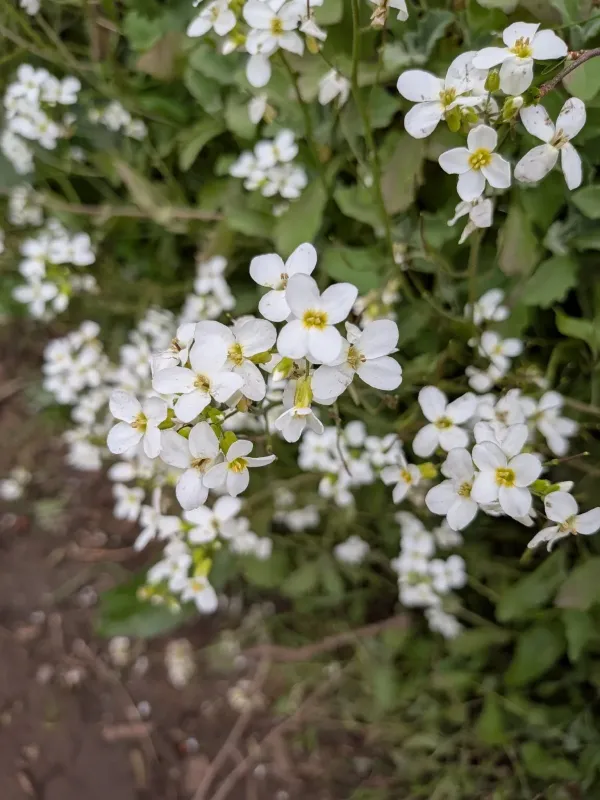
Arabis caucasica, commonly known as garden rock cress, belongs to the Brassicaceae family. It is a popular perennial plant used extensively as a decorative ground cover.
Seeds can be sown directly into the soil in early spring or autumn. For better germination rates, many agronomists recommend cold stratification of the seeds before planting.
Indoor sowing begins in March using seedling trays. Seeds should be lightly covered with substrate and kept at a temperature of around 18–20 degrees Celsius.
Once seedlings develop two or three true leaves, they are ready for transplanting. Proper spacing is essential to ensure adequate airflow and prevent overcrowding.
Vegetative propagation via cuttings is also a common method. Cuttings are taken in late summer and rooted in a sandy mixture to produce new, healthy plants.
Growing requirements
The plant thrives in full sun but can tolerate partial shade. However, optimal flowering occurs only under direct sunlight, which promotes compact growth patterns.
Well-drained, sandy, or stony soil is ideal. The plant is highly sensitive to waterlogging, as standing water in the root zone quickly causes rot and plant death.
It is a low-maintenance crop requiring minimal watering. Only during prolonged dry spells is supplemental irrigation necessary to sustain the health of the plant.
Fertilization should be done sparingly, usually once in the early spring. A balanced slow-release fertilizer is sufficient to support seasonal development.
Pruning after the flowering period is highly recommended. Trimming the stems back by half promotes thicker, bushier growth and prevents the plant from becoming woody.
Main diseases and pests
Clubroot is the most significant disease for this species. It leads to distorted roots and stunted plant development, often requiring immediate removal of the plant.
Powdery mildew can occur in humid, stagnant conditions. Improving airflow through proper plant spacing is the best preventative measure against this fungal disease.
Flea beetles are common pests that chew small holes in the foliage. Regular inspection of the leaves is necessary to catch and control infestations early.
Aphids may occasionally target the new growth, causing curling and yellowing of the leaves. Using organic insecticidal soaps is usually effective for management.
Good cultural practices, including consistent weed control and avoiding over-fertilization with nitrogen, are essential to maintain overall plant resistance to pests.