
Long-leaved lungwort
Pulmonaria longifolia (T. Bastard) Boreau x Pulmonaria saccharata Mill.
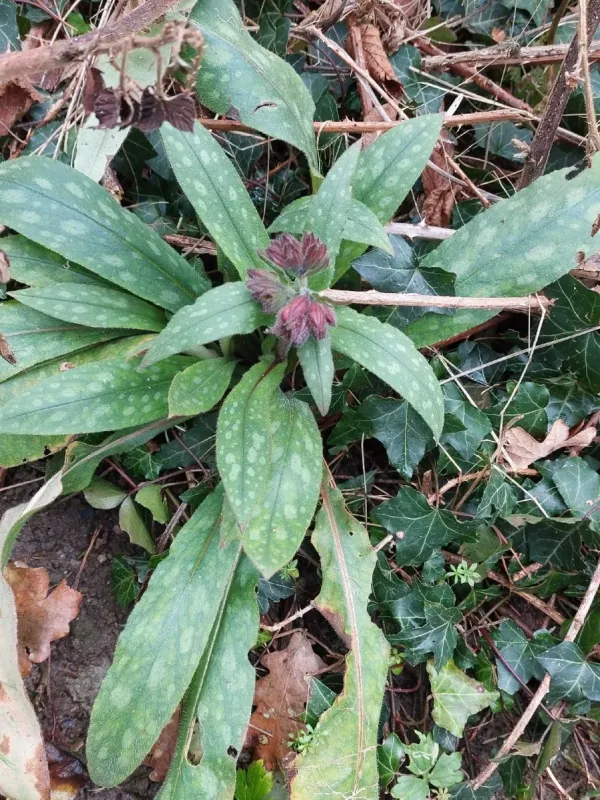
Description
Sowing dates
Sowing seeds of the long-leaved lungwort is typically carried out in spring or autumn. Autumn sowing is often preferred as it allows the seeds to undergo natural stratification, which is essential for high germination rates in the following season.
Seeds should be sown at a shallow depth of 1 to 2 centimeters. Maintaining consistent moisture in the soil is critical during the germination phase to ensure the young seedlings do not wither under dry conditions.
Vegetative propagation via clump division is the most reliable method for maintaining the unique characteristics of specific hybrids. This process is ideally performed in early spring or late August, ensuring the plants establish themselves before the onset of extreme temperatures.
When establishing a plantation, the recommended planting density is 6 to 9 plants per square meter for ground cover purposes. Proper spacing is necessary to allow air circulation between the plants, which reduces the risk of fungal infections.
In greenhouse settings, seeds can be started in late winter. Once the seedlings develop several true leaves, they should be hardened off before transplanting into the permanent growing site to prevent transplant shock.
Growing requirements
Long-leaved lungwort, a member of the Boraginaceae family, is a hybrid derived from Pulmonaria longifolia and Pulmonaria saccharata. It is a robust perennial valued for its longevity and specific environmental adaptations.
The plant thrives in fertile, well-drained loamy soils with a neutral to slightly alkaline pH. Adequate drainage is essential, as the roots are highly susceptible to rot if subjected to waterlogged conditions during the winter months.
This species is highly shade-tolerant, making it an excellent choice for woodland gardens or shaded areas where other flowering plants might struggle. Partial shade protects the foliage from scorch during the hottest parts of the day.
Agrotechnical maintenance requires periodic watering during dry spells and the application of organic mulch around the root zone. Mulching helps to conserve soil moisture and suppresses the growth of weeds around the base of the plant.
The plant is known for its high degree of winter hardiness. In regions with harsh, frost-prone climates, applying a layer of organic mulch protects the crown and ensures vigorous growth when spring arrives.
Main diseases and pests
Powdery mildew is the most common disease affecting lungwort, especially in humid or poorly ventilated growing conditions. The presence of a white, dusty layer on the leaves necessitates prompt treatment with appropriate fungicides.
Root rot is a significant threat associated with improper irrigation practices or poor soil structure. Maintaining a well-drained substrate and avoiding excess water is the primary defense strategy for growers.
Slugs and snails can cause substantial damage to the foliage, particularly during the wet spring months. Implementing physical barriers or using pet-safe bait is recommended to control these pests in intensive garden settings.
Weevils may occasionally infest the foliage, leading to notched leaf edges. Regular monitoring during the growing season allows for early intervention, ensuring that plant vitality is not compromised by insect herbivory.
To minimize disease pressure, it is essential to ensure adequate airflow within the plant cluster. Removing diseased leaves promptly helps to mitigate the spread of pathogens throughout the planting area.