
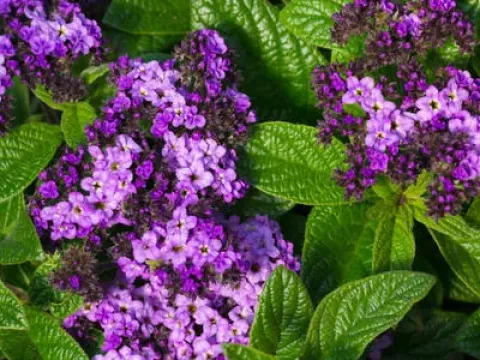
Heliotropium hybrids
Heliotropium hybrids
Sowing seeds of Heliotropium hybrids typically takes place in late February or March. The seeds are minute and should be surface-sown on a moist, fine-textured starting mix without deep covering.
What the section contains
Heliotropium hybrids
For successful germination, containers should be covered with plastic or glass to maintain a constant temperature of 20–22 degrees Celsius and high humidity levels.
Pricking out the seedlings occurs when the first pair of true leaves appears. Plants are then moved into individual pots to facilitate root development before the final transplantation into the open field.
Transplanting to the garden happens once the danger of frost has passed, usually late May or June, requiring a hardening-off period to acclimatize the plants to outdoor conditions.
The chosen site must be well-lit, as these plants thrive in full sun and require significant light intensity to produce their characteristic deep blue or purple color and strong scent.
Heliotropium hybrids belong to the Boraginaceae family and are cultivated for their intense vanilla-like fragrance and rich, clustered floral displays that attract pollinators.
The crop requires fertile, well-draining, and humus-rich soil with a neutral pH. Proper soil structure is essential to support the extensive root system and prevent waterlogging.
Regular irrigation is vital throughout the growing season, as these plants are sensitive to both drought stress and overly saturated soil, which can quickly lead to root rot.
A balanced liquid fertilizer should be applied every two weeks during the active growth phase to ensure consistent blooming and overall plant vigor throughout the summer months.
Temperature management is crucial, as the hybrid is heat-loving and prefers warm days; development stalls significantly if temperatures drop below 10 degrees Celsius.
Spider mites are the most persistent pests for Heliotropium, especially in dry and hot conditions, where they spin fine webs and cause premature leaf yellowing.
Aphids often colonize the tender shoots and floral buds, leading to stunted growth and providing entry points for various viral diseases that affect the hybrid cultivars.
Whiteflies can pose a severe threat in confined environments or greenhouses, requiring immediate integrated pest management strategies to prevent rapid infestation spread.
Fungal issues such as grey mold and powdery mildew are common when airflow is poor or when the foliage remains wet for extended periods in humid weather.
Prevention relies on adequate spacing between plants to improve circulation, early detection through scouting, and the strategic application of approved insecticides and fungicides.
Heliotropium hybrids are primarily used in ornamental horticulture as bedding plants, containers, and, to a lesser extent, as a source for essential oils in perfumery.
For ornamental purposes, harvesting involves deadheading spent blooms, which effectively encourages the plant to channel energy into producing new, vigorous flowering stems.
In cases where raw material for fragrance is required, the flowers are harvested at peak bloom when essential oil concentration in the blossoms is at its absolute maximum.
Drying for storage should be performed in a cool, well-ventilated, and dark area to preserve the delicate aromatic compounds from degradation by heat and light.
For overwintering in cooler zones, mature plants can be lifted from the garden and maintained in pots within a bright, frost-free greenhouse with restricted irrigation.