
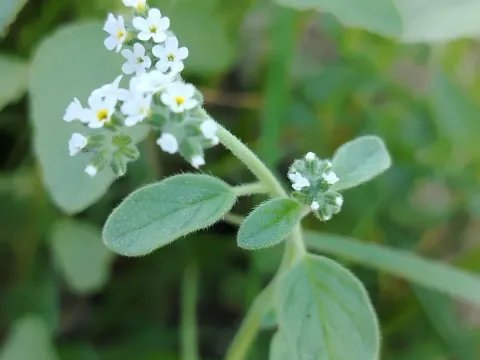
Heliotropium ellipticum
Heliotropium ellipticum
Heliotropium ellipticum, a member of the Boraginaceae family, requires specific thermal conditions for germination, typically thriving when soil temperatures stabilize between 10–12°C.
What the section contains
Heliotropium ellipticum
Sowing in agricultural practice is best executed after the risk of late spring frosts has completely passed, as young seedlings are highly sensitive to cold damage.
Fall sowing is often utilized in cooler regions, allowing seeds to undergo natural winter dormancy, which improves the uniformity and vigor of spring germination.
The seeds should be sown at a shallow depth of approximately 1–2 centimeters, ensuring sufficient seed-to-soil contact for optimal moisture uptake during the initial phase.
Spacing between rows should be maintained at 45–60 centimeters to ensure adequate airflow and light penetration, which are critical for the healthy development of this crop.
This plant is highly heliophilic, meaning it requires full sun exposure throughout the day to reach its maximum productive potential in terms of biomass production.
Heliotropium ellipticum prefers light-textured soils, including sandy loams, which provide the essential drainage necessary to prevent root rot and related issues.
The species exhibits remarkable drought resistance due to its evolutionary adaptation to arid environments, making it suitable for regions with limited rainfall.
Waterlogged soil must be strictly avoided, as the plant’s root system quickly suffers in anaerobic conditions characterized by poor aeration and stagnant moisture.
Soil pH levels should generally fall within the range of 6.5 to 7.5; the plant shows significant plasticity, allowing it to perform well even in slightly alkaline or saline soils.
The crop is occasionally prone to powdery mildew, especially during humid spells where high relative humidity limits the evaporation of moisture from leaves.
Pests such as aphids and various weevils frequently attack young tissue, potentially reducing overall growth rates if infestations are not monitored and controlled promptly.
Root rot caused by soil-borne pathogens can occur if water management is poor or if the soil structure remains compacted for extended periods during the growing season.
Integrated pest management (IPM) strategies, including crop rotation and the maintenance of clear field margins, are effective in minimizing disease pressure.
Chemical control, if necessary, should be applied at the early stages of the infestation to prevent the spread of pests across the entire field and ensure harvest quality.
Harvesting should be timed to coincide with the period of peak flowering, as the chemical content of the biomass is at its most concentrated state during this stage.
Mechanical harvesting via mowing is the standard method, with the cutter bar set at 5–10 centimeters above the ground to facilitate efficient biomass collection.
Rapid transport to drying facilities is essential to prevent the degradation of harvested material, particularly if the moisture content at the time of cutting is high.
Drying is conducted in controlled environments with adequate ventilation, maintaining temperatures below 45°C to preserve the sensitive chemical components of the plant.
Final processing involves mechanical sorting and debris removal to ensure that the final product meets standard quality requirements before packaging for distribution.