
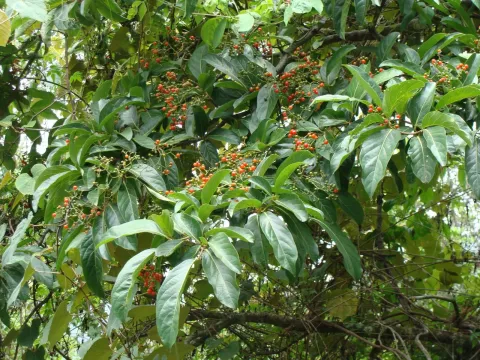
Cordia collococca
Cordia collococca
Cordia collococca is a perennial tree belonging to the Boraginaceae family. It is native to the tropical regions of Central and South America, where it thrives in warm and humid environments.
What the section contains
Cordia collococca
The tree requires a tropical or subtropical climate to reach its full potential. It is sensitive to frost, which limits its commercial cultivation to frost-free geographical zones.
Soil requirements include deep, well-draining, and nutrient-rich substrates. While the plant shows moderate drought tolerance, adequate soil moisture is critical during the initial growth stages.
Full sun exposure is vital for the development of healthy foliage and optimal fruit production. Partial shade can be tolerated by young saplings, but mature trees prefer open sunny areas.
Cultivation practices involve pruning to maintain an open canopy structure, which ensures proper air circulation and light penetration, facilitating better fruit development and harvest access.
The primary economic output of Cordia collococca is its edible fruit. These berries are sweet and commonly consumed locally, often processed into jams, syrups, or fermented beverages.
The wood of the tree is highly valued for its durability and attractive grain. It is widely used in carpentry for crafting high-quality furniture, tool handles, and decorative wooden products.
Various parts of the tree, including the bark and leaves, have been historically used in traditional medicinal practices for their anti-inflammatory properties.
The tree plays a significant role in local ecosystems by providing habitats and food sources for various bird and insect species, thereby supporting sustainable agricultural biodiversity.
Harvesting is performed manually once the fruits reach full maturity. Yields are typically consistent, and the tree can produce fruit over an extended season with proper agricultural management.
Fungal pathogens represent the most significant threat to Cordia collococca, especially in areas with high humidity. Ensuring proper spacing between trees helps reduce the spread of fungal spores.
Common pests such as aphids and scale insects can affect plant vigor. Integrated pest management, including the use of neem oil and biological controls, is effective in managing these infestations.
Root health is crucial; overwatering can lead to root rot. Maintaining a proper drainage system is a necessary preventive measure against soil-borne pathogens that target the root zone.
Mechanical damage from severe weather, such as heavy tropical storms, can impact the structural integrity of the branches. Selecting sheltered planting sites minimizes these risks.
Management of fruit flies is also important to maintain crop quality. Monitoring and the use of pheromone traps can significantly lower the damage caused by these insects during the ripening period.