
Cordia boissieri
Cordia boissieri
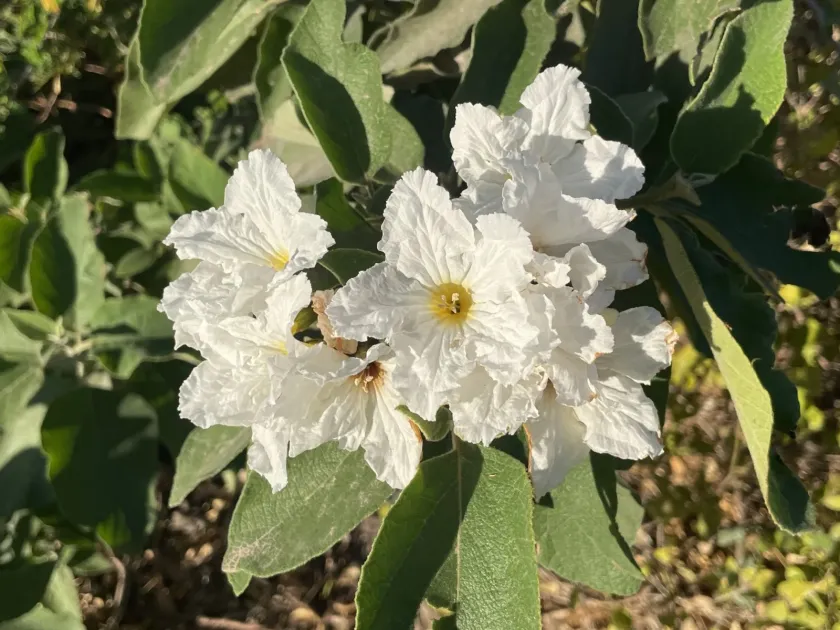
Description
Growing requirements
Cordia boissieri, commonly known as the Texas wild olive, is an evergreen tree or large shrub belonging to the Boraginaceae family. It is prized for its stunning white, funnel-shaped flowers that bloom almost continuously in warm conditions.
Native to the arid regions of northern Mexico and southern Texas, this species is highly adapted to xeriscaping. Its natural habitat is characterized by high temperatures and irregular, sparse rainfall patterns.
For optimal cultivation, the plant requires a location in full sun. While it can tolerate partial shade, insufficient light intensity will lead to a significant reduction in flowering and a sparser crown structure.
Soil requirements are relatively specific: the plant demands excellent drainage. It thrives in alkaline or neutral rocky soils and will struggle or perish if planted in heavy clay that retains moisture for extended periods.
Climate tolerance is a key feature of the species. It is drought-tolerant once established and can survive brief cold snaps down to approximately -7°C, though protection is advisable during extreme winters.
Main diseases and pests
Root rot is the most significant threat to the health of Cordia boissieri, almost exclusively caused by overwatering or poor soil drainage. Maintaining a dry root zone is critical for the plant's survival.
Pests such as scale insects and mealybugs can infest the foliage, particularly if the plant is grown in confined conditions or has suboptimal airflow. These infestations require targeted insecticide treatment.
Fungal diseases, including leaf spot, may occur during seasons with unusually high humidity. These conditions typically require the application of appropriate fungicides and a reduction in atmospheric or soil moisture.
Improper pruning during the wrong season can lead to structural weakness and vulnerability to infection. It is recommended to perform all pruning tasks after the main flowering season is complete.
Regular monitoring of the canopy and base of the trunk is essential. By identifying early signs of distress, such as discolored leaves or soft wood, growers can implement corrective measures before the issue becomes systemic.
Harvesting
The primary use of Cordia boissieri is horticultural. It is a popular choice for urban landscaping and residential gardens due to its low water requirements and year-round green foliage.
The fruit of the tree is a small, fleshy drupe that is not consumed by humans but is highly attractive to local bird species and wildlife, serving as a vital food source in its native environment.
Wood from this tree is very hard and dense, although the tree's typical size limits its industrial use. Local artisans sometimes use the timber for small-scale woodturning or handcrafted decorative items.
In rural areas, it is often employed as an ornamental windbreak. Its dense canopy provides shelter for smaller species and helps to stabilize soil in areas prone to erosion.
Harvesting for propagation purposes involves collecting ripe fruit as it falls or turns dark brown. Seeds should be cleaned and planted in a well-draining medium to ensure high germination rates.