
Arnebia guttata
Arnebia guttata
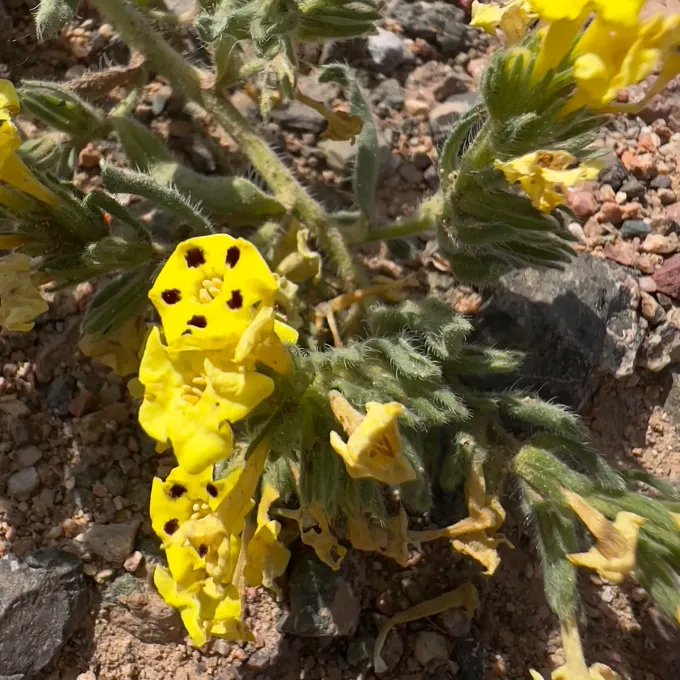
Description
Sowing dates
The sowing of Arnebia guttata is typically carried out in early spring once soil temperatures reach a steady 10–12 degrees Celsius. It is essential to ensure that the seedbed is finely prepared to facilitate optimal germination.
Seeds of this plant often require stratification to break dormancy. A period of cold, moist storage for approximately one month significantly increases germination rates, ensuring a more uniform crop establishment.
Seeds should be sown at a depth of 1–2 centimeters. Shallow planting ensures that the delicate seedlings do not exhaust their energy reserves before breaking through the soil surface in the field.
Maintaining a row spacing of 30–45 centimeters is recommended for commercial cultivation. This spacing allows for mechanical weeding and ensures that each plant has enough room to develop its deep root system.
Autumn sowing is also an option in certain climates, allowing the seeds to undergo natural winter stratification, which often results in earlier emergence and more vigorous growth during the subsequent spring.
Growing requirements
Arnebia guttata belongs to the Boraginaceae family and thrives in open, sunny environments. It is highly intolerant of shade, and even partial shading during the day can negatively affect plant development.
The crop prefers well-drained, sandy or gravelly soils. Since the species is native to arid steppes, it is extremely sensitive to waterlogging, which can rapidly lead to root decay and total crop loss.
Drought tolerance is a signature trait of this plant. It is well-adapted to environments with low annual rainfall and can maintain steady growth even during prolonged dry spells that would stress other crops.
Soil pH should ideally be neutral to slightly alkaline. The plant does not perform well in acidic soils, so liming may be necessary if the local soil profile deviates from the preferred range.
While the plant is hardy, basic fertility management, particularly the inclusion of phosphorus, can support better root architecture and overall plant resilience against environmental stress factors.
Yield
The primary economic value of Arnebia guttata is found in its roots, which are rich in naphthoquinones. Yields are typically measured by the dry weight of the harvested roots after the plants have reached maturity.
Maximum yields are generally achieved in the second or third growing season. In the first year, the plant focuses on establishing a robust taproot, which is the site of the highest concentration of phytochemicals.
Average commercial yields can reach 1.5 to 2.5 tonnes of dried root per hectare under optimal conditions. Consistency in field maintenance and weed control is the primary driver of these yield metrics.
Seed harvesting requires careful timing, as the capsules mature unevenly. Implementing multiple harvests during the seed-ripening phase is necessary to prevent significant yield losses through natural seed shedding.
Future agricultural potential rests on identifying high-yielding genotypes that exhibit uniform maturation, which would simplify the mechanical harvesting process and improve overall cost-efficiency.
Main diseases and pests
Root rot is the most significant pathological threat to Arnebia guttata, especially when soil moisture levels exceed the plant's natural tolerance. Maintaining proper drainage is the best defense against fungal infections.
Pests such as aphids and cutworms may target the succulent leaves of young plants. Integrated pest management, focusing on biological controls, is preferred to maintain the organic integrity of the raw material.
Powdery mildew can occur during periods of high humidity and poor air circulation. Proper planting density and ensuring adequate spacing between plants can significantly reduce the risk of such outbreaks.
Weeds are a major concern during the early establishment phase. Because Arnebia is a slow grower initially, it is easily outcompeted by aggressive weeds, necessitating frequent manual or light mechanical weeding.
Physiological distress caused by incorrect irrigation practices often invites secondary pathogens. Regular scouting of the field is crucial for early detection and prevention of widespread health issues.
Harvesting
Harvesting of the roots occurs in late autumn when the plant enters dormancy. Mechanical diggers are utilized to extract the taproots, ensuring minimal breakage to preserve the quality of the raw material.
Once extracted, the roots must be cleaned of all soil particles using clean, running water. This processing step is essential for meeting the purity standards required for pharmaceutical and cosmetic applications.
Drying must be performed in a controlled environment at temperatures not exceeding 45 degrees Celsius. Excessive heat can degrade the heat-sensitive compounds responsible for the plant's medicinal properties.
Once dried, the product should be brittle and retain its characteristic color. Storage in cool, dry, and dark conditions is required to maintain the stability of the active naphthoquinone compounds over time.
Packaging in breathable materials, such as heavy-duty paper sacks, ensures that the stored roots remain protected from moisture while preventing the development of mold during long-term storage.