
Arnebia linearifolia
Arnebia linearifolia
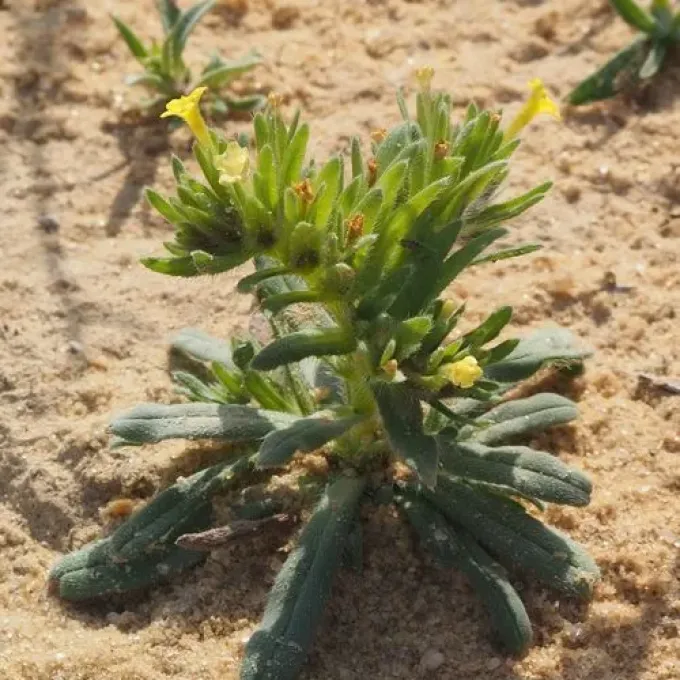
Description
Sowing dates
Arnebia linearifolia is a distinctive member of the Boraginaceae family. Its seeds exhibit high germination energy when managed under appropriate environmental conditions, typical for arid-zone plants.
Sowing in agricultural conditions should be performed in early spring once the soil temperature reaches 10-12 degrees Celsius. A seeding depth of 1-2 centimeters is recommended to ensure optimal sprout emergence.
A wide-row planting method is generally preferred in professional cultivation to allow for adequate spacing. Seedlings typically appear within 14-20 days, provided there is sufficient moisture during the initial stage.
Stratification of seeds for 30-45 days prior to sowing is a common practice to enhance uniformity in emergence. This technique is particularly effective in temperate climates where spring temperatures fluctuate.
Maintaining the soil surface and preventing crusting is crucial during the initial growth phase. Gentle inter-row cultivation helps in soil aeration, which promotes faster development of the primary root system.
Growing requirements
Arnebia linearifolia is a drought-tolerant crop that favors rocky or sandy soil types. It is particularly well-suited for cultivation on marginal lands where water resources are limited or soil quality is poor.
Excellent drainage is the most critical requirement for this plant, as waterlogging can cause immediate damage to the roots. Ideal soils are light, sandy loams with a neutral to slightly alkaline pH.
Sunlight exposure is essential for the plant to thrive; it requires full sun throughout the entire growing season. Shading can lead to weak, elongated stems and a reduction in the production of beneficial secondary metabolites.
The plant grows best in temperatures ranging from 20 to 25 degrees Celsius. It possesses high heat resistance, making it an excellent candidate for cultivation in arid regions or hot climates.
Mineral fertilization should be applied with caution; excessive nitrogen can reduce the quality of the raw material. Phosphorus and potassium applications are preferred to strengthen the roots and improve overall plant resilience.
Yield
The yield of green biomass depends heavily on solar radiation levels and efficient weed control. With standard agricultural practices, the plant can produce stable yields even in challenging environmental conditions.
Harvesting is best conducted during the mass flowering phase, as this is when the concentration of active chemical compounds in the plant is at its peak. Timing the harvest is vital for industrial applications.
Seed yield is also significant, allowing farmers to maintain a sustainable cycle of cultivation without constant external seed procurement. The crop is highly efficient in its reproductive phase.
Intensive farming can yield multiple cuts, although the primary cut generally provides the highest quality raw material. Monitoring plant density ensures that the crop is not over-competing for resources.
Studies suggest that Arnebia linearifolia is a promising crop for reclaiming degraded land. Its ability to grow in tough soil types makes it an excellent choice for environmental restoration projects.
Main diseases and pests
Fungal infections, often triggered by excessive humidity, pose the greatest threat to Arnebia linearifolia. Root rot can be devastating if the soil drainage is not maintained properly.
Soil-borne pests can cause damage to the root collar of the plant. Regular field inspections and integrated pest management strategies are essential to identify and mitigate damage early in the season.
Aphids can infest young shoots, drawing nutrients and stunting plant growth. Using biological control agents or insecticidal soaps is recommended to protect the crop while maintaining sustainable practices.
Effective crop rotation is mandatory to prevent the build-up of common Boraginaceae pathogens. It is advised to avoid planting on sites used by related species within the last five years.
High-quality, disease-free seed stock is the foundation of a successful harvest. Treating seeds before planting can significantly improve survival rates and reduce early-stage vulnerability to various pathogens.
Harvesting
Harvesting should take place in the morning, after the dew has evaporated. Utilizing specialized harvesting machinery can help in processing large areas efficiently while minimizing biomass loss.
Post-harvest, the raw material must be dried rapidly in a well-ventilated area or in mechanical dryers at temperatures not exceeding 45 degrees Celsius to preserve its medicinal properties.
Seed collection requires manual or mechanical intervention as the seeds reach maturity. Since maturation may be uneven across the field, careful observation is necessary to determine the optimal window for harvest.
Storage of seeds should be in cool, dry conditions with adequate airflow. Maintaining a consistent temperature below 18 degrees Celsius prevents pre-germination and mold development.
Cleaning and grading the seeds with air-screen cleaners or pneumatic separators is crucial for the final product marketability. Clean seeds have better germination rates for the following planting season.