
Blue houndstongue
Cynoglossum caeruleum
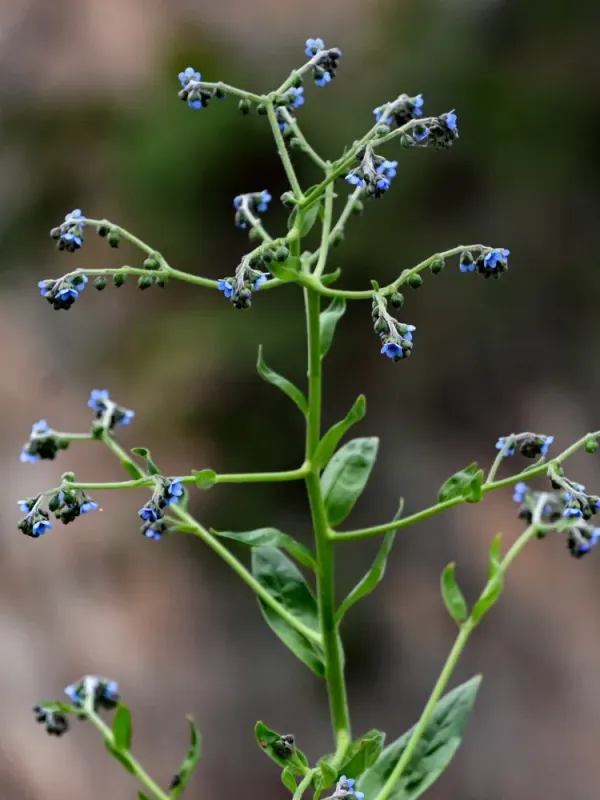
Description
Sowing dates
Blue houndstongue (Cynoglossum caeruleum) belongs to the Boraginaceae family. Sowing is typically carried out in early spring once the soil temperature reaches at least 10 degrees Celsius.
Due to the hard seed coat, it is highly recommended to perform stratification before planting to ensure uniform germination across the field.
Seeds are sown at a depth of approximately 1.5 to 2 centimeters. Maintaining specific row spacing, usually around 45 centimeters, allows for easier mechanical maintenance and aeration.
The establishment phase requires careful weed management as the seedlings develop slowly and cannot easily compete with aggressive annual weeds.
Adequate soil moisture must be maintained during the initial two weeks after sowing to promote successful root penetration and seedling emergence.
Growing requirements
This crop thrives in open, sunny locations. Insufficient sunlight exposure significantly reduces the concentration of beneficial secondary metabolites in the plant tissues.
Ideal soil conditions include well-drained loam or sandy-loam structures with a neutral pH level, which prevents moisture stagnation and root rot.
The plant demonstrates excellent drought resistance once established. Its deep root system allows it to withstand periods of low precipitation effectively.
Fertilization should prioritize phosphorus and potassium to support structural integrity and chemical composition, avoiding excessive nitrogen that triggers rank growth.
Regular cultivation and inter-row hoeing are essential throughout the vegetative period to maintain soil texture and ensure optimal oxygen supply to the rhizosphere.
Main diseases and pests
Fungal pathogens such as root rot pose the most significant risk when the crop is cultivated in poorly drained or overly dense soil conditions.
Powdery mildew is a common foliage issue during seasons with high humidity and stagnant air, necessitating proper spacing and canopy management.
Various aphid species are known to colonize the plant, particularly during the early bloom stage, potentially reducing the overall vigor of the crop.
Leaf-eating caterpillars may cause substantial damage to the photosynthetic surface area if left uncontrolled during the primary growth cycle.
Integrated pest management, including crop rotation and the removal of host plants in the surrounding area, is critical for protecting the health of the stand.