
Arnebia hispidissima
Arnebia hispidissima
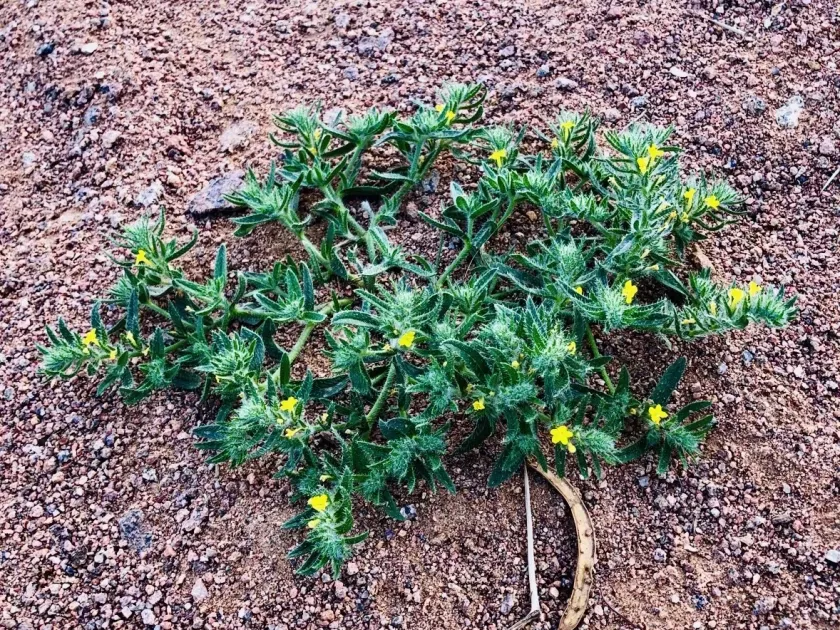
Description
Sowing dates
Arnebia hispidissima is a hardy perennial belonging to the Boraginaceae family. It is primarily found in arid and semi-arid regions of North Africa and Western Asia, where it thrives in harsh environments.
The sowing process requires well-drained, loose soil to facilitate the germination of its seeds. Seeds are typically sown at the beginning of the rainy season to capitalize on natural moisture for early establishment.
In a controlled agricultural setting, rows should be spaced 40–50 centimeters apart to prevent plant competition. Proper spacing is crucial to ensure that each individual plant develops a robust taproot system.
When using precise seeding equipment, it is important to maintain a shallow planting depth of approximately 1 to 2 centimeters. Over-depth sowing can significantly reduce germination percentages for this species.
Early stage development is relatively slow, so farmers should ensure the field is free from weeds before sowing. Consistent soil temperature is vital for uniform emergence of the seedlings.
Growing requirements
This crop is a classic xerophyte, demonstrating remarkable tolerance to drought. It prefers sandy or loamy soils that possess excellent aeration and drainage properties to support root health.
Arnebia hispidissima demands full solar exposure throughout its life cycle. Any reduction in daily sunlight hours will adversely affect the accumulation of secondary metabolites within the plant's roots.
The thermal optimum for growth ranges from 25 to 35 degrees Celsius. The plant is highly adapted to extreme heat, making it an excellent candidate for cultivation in arid climates where other crops fail.
Soil nutrient management should focus on phosphorus and potassium levels rather than nitrogen. Excessive nitrogen often leads to excessive biomass at the expense of the root, which is the primary economic component.
While the plant is drought-resistant, occasional irrigation during the initial establishment phase can significantly improve survival rates and overall yield potential for the first harvest cycle.
Yield
The yield of Arnebia hispidissima is primarily measured by the dry mass of the harvested roots. Roots are harvested after two to three years of growth when secondary metabolite concentrations peak.
Average yield potential under optimized conditions can reach several quintals per hectare. The quality is judged by the concentration of naphthoquinones and other pigments present in the bark of the roots.
These pigments are highly valued in both the pharmaceutical and textile industries as natural dyes and bioactive components. The economic viability of the crop is directly tied to its purity and quality.
Modern harvesting techniques involve mechanical deep-tilling to lift the roots without excessive damage. Preventing skin abrasions is vital, as the bioactive pigments are located near the surface.
Yield variations are often associated with soil type and the length of the growing period. Extending the harvest time can lead to larger root diameters, thus increasing the total harvest weight.
Main diseases and pests
Root rot caused by fungal pathogens is the most significant threat to the crop. This usually occurs when the soil is overly compacted or saturated with moisture, preventing oxygen flow to the roots.
Pests such as wireworms and various soil-dwelling insects can cause direct damage to the taproot. Integrated pest management (IPM) practices are recommended to minimize the impact of these infestations.
Weed competition remains the most critical issue during the first few weeks of growth. The slow initial development of the plant makes it susceptible to being outcompeted by fast-growing aggressive weeds.
While powdery mildew can occasionally manifest on leaves in humid conditions, it rarely causes total crop failure. Proper spacing and airflow are the best preventative measures against foliage diseases.
Crop rotation is essential for maintaining soil health and preventing the buildup of pathogens. It is recommended to rotate the field with unrelated crop species to maintain long-term soil productivity.
Harvesting
Harvesting should be conducted during dry weather to ensure the longevity of the harvested roots. Moisture in the roots post-harvest facilitates rapid deterioration and microbial spoilage.
After excavation, roots are gently cleaned of soil and debris. Excess moisture must be avoided, as the active pigments can be partially water-soluble or easily degraded by oxidation.
Drying is performed in controlled environments or shaded open-air structures. Keeping the temperature below 40 degrees Celsius is crucial to protect the structural integrity of the active chemical compounds.
Once dried, the roots must be stored in airtight, light-resistant containers. This preserves the color and chemical efficacy of the roots, which are highly sensitive to prolonged UV exposure.
Transportation of the dried crop requires careful handling to prevent mechanical breakage. Proper bulk packaging helps ensure that the product arrives at the processing facility in optimal condition.