
Arnebia euchroma
Arnebia euchroma
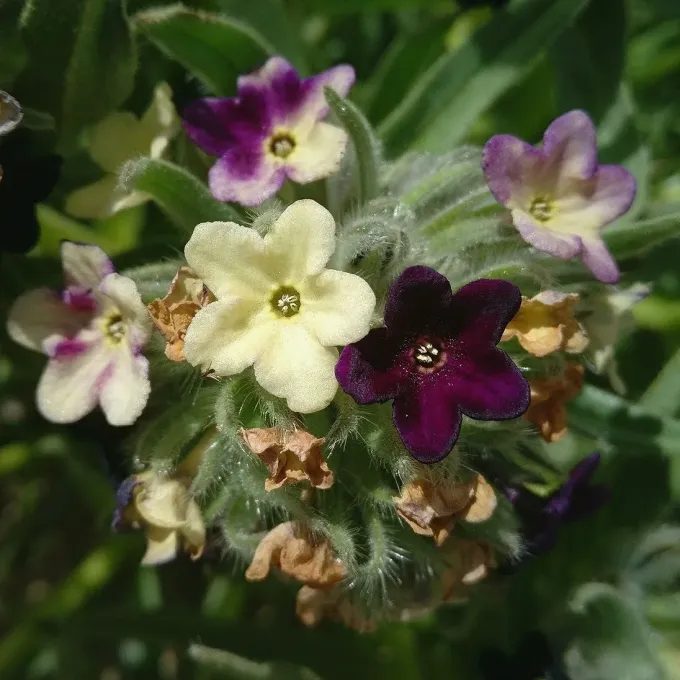
Description
Sowing dates
Arnebia euchroma is a medicinal perennial herb belonging to the Boraginaceae family. Successful cultivation requires careful preparation of seeds, which often benefit from cold stratification to overcome dormancy before sowing in the spring.
The planting site should be well-prepared with loose, sandy, or sandy-loam soil that ensures excellent drainage. Seeds are sown at a shallow depth of approximately 1–2 centimeters to allow for optimal emergence and to prevent rot in the early stages.
Early spring is the preferred sowing season, provided the soil has warmed sufficiently. As the seedlings grow slowly during the first year, establishing a weed-free environment is critical for their survival and development of the taproot system.
A typical sowing density involves row spacing of 45–60 centimeters, which provides sufficient space for mechanical weeding and proper air circulation around the plants. This spacing helps mitigate the risk of fungal infections caused by high humidity near the soil surface.
Maintaining uniform soil moisture after planting is necessary for germination, but once the plants are established, they demonstrate significant drought tolerance. The goal is to encourage deep root penetration during the initial growth phase.
Growing requirements
This species thrives in sunny, open locations and is highly sensitive to shade, which can reduce the synthesis of beneficial phytochemicals. It originates from mountainous and arid regions, making it naturally adapted to dry conditions.
Soil structure is paramount: Arnebia euchroma requires well-drained, porous soil to prevent water stagnation. Heavy clays or soils prone to compaction are unsuitable as they quickly lead to root decay and overall plant failure.
Regarding climate, the plant is remarkably hardy and resistant to temperature fluctuations typical of high-altitude regions. It prefers moderate temperature zones and does not respond well to excessive heat combined with high ambient humidity.
Nutrient management should be focused on phosphorus and potassium to support root development. Excess nitrogen should be avoided, as it encourages excessive vegetative growth rather than the development of the high-value root system required for harvesting.
Field management includes regular inter-row cultivation to keep the soil aerated. This practice is essential for maintaining the health of the plant and supporting the accumulation of alkannin and shikonin within the roots.
Yield
The primary yield from Arnebia euchroma is its root system, which contains red pigments valuable in pharmaceuticals and dyes. Harvesting is typically conducted after 3 to 4 years of growth to ensure the roots have accumulated sufficient bioactive compounds.
Yield metrics depend on the intensity of management and soil quality. High-quality production is measured not only by root biomass but also by the concentration of pigment-based secondary metabolites, which determines the final market value.
Processing involves cleaning and careful drying of the roots. Because the active components can be sensitive to oxidation, maintaining appropriate storage and drying temperatures is crucial for preserving the quality of the raw material.
Economic feasibility relies on achieving a consistent harvest of high-purity roots. Proper crop rotation practices should be followed to avoid soil-borne pathogens and to maintain the fertility and microbial health of the field.
With global interest in natural dyes and herbal medicine, the yield of Arnebia euchroma represents a specialized niche. Improving cultivation efficiency through precise agricultural technology is the primary goal for commercial growers.
Main diseases and pests
Fungal diseases, particularly root rots such as Fusarium and Rhizoctonia, are the most significant threats to this crop. These pathogens thrive in poorly drained soils and pose a constant risk to the plant's health.
Soil-dwelling pests like wireworms and mole crickets can cause extensive damage to the roots. Preventive measures, such as soil treatment prior to planting and integrated pest management, are essential to protect the harvest.
Weed competition is a severe issue during the establishment period. Failure to control weeds will result in stunted plants, low root biomass, and significant yield reduction, making herbicides or manual hoeing necessary.
Leaf-feeding insects, including aphids and mites, can weaken the plants during hot, dry weather. While usually less lethal than root pathogens, high populations can reduce photosynthetic capacity and weaken the overall plant vitality.
Effective defense strategies focus on creating an environment that minimizes stress. Providing proper drainage, selecting healthy seeds, and using clean planting tools are the most effective ways to manage threats to Arnebia fields.
Harvesting
Harvesting is performed during the dormant season, typically in the autumn, once the vegetative growth has naturally ceased. This timing ensures that the concentration of secondary metabolites in the roots is at its maximum peak.
The digging process must be executed carefully to avoid breaking the fragile, pigment-rich roots. Mechanical harvesters should be adjusted to operate at the correct depth to minimize mechanical damage to the crop.
Immediately after lifting, the roots must be thoroughly washed to remove all soil and debris. This cleaning process is crucial to prevent microbial contamination and to prepare the roots for the drying phase.
Drying is a delicate process requiring controlled ventilation and moderate heat. Temperatures should not exceed 50 degrees Celsius to prevent the chemical breakdown of the heat-sensitive pigments that make the roots commercially viable.
Once dried, the product should be stored in a cool, dark, and dry environment. Utilizing moisture-proof packaging is highly recommended to protect the product's color and chemical integrity until it is ready for further processing or export.