
Arnebia decumbens
Arnebia decumbens
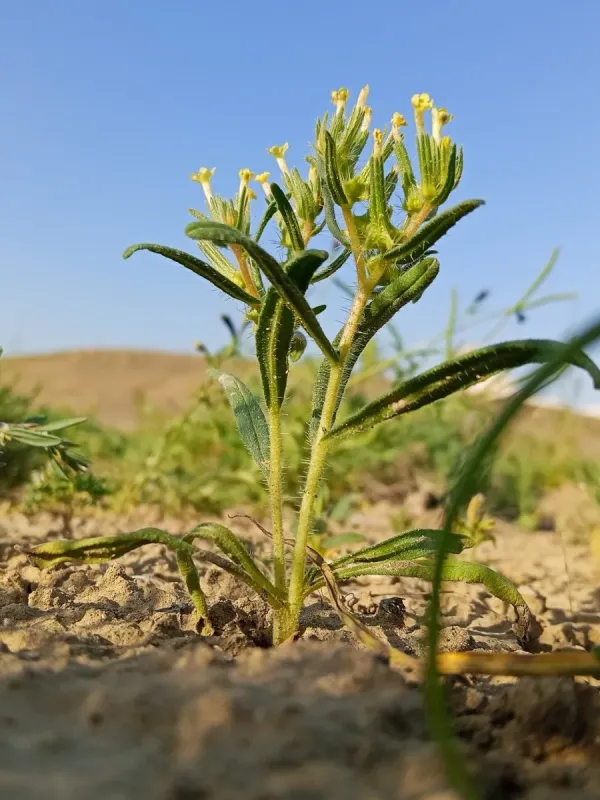
Description
Sowing dates
Arnebia decumbens is an annual herbaceous plant that begins its lifecycle during the spring when soil temperatures reach 10-12 degrees Celsius. Proper seed preparation, including potential stratification, is often recommended to ensure uniform germination in temperate climates.
Sowing is typically conducted in rows with spacing of up to 45 centimeters, which facilitates essential maintenance tasks. Seeds should be sown at a depth of 1-2 centimeters, as shallow planting is crucial for small seeds to maintain contact with moisture.
In arid regions, winter or early spring sowing is highly encouraged to leverage residual soil moisture. This practice is vital for establishing a robust root system before the onset of extreme summer heat.
The crop is highly adaptable, though delayed sowing often results in reduced biomass. Early planting allows the plant to become established and resilient before the peak growing season temperatures.
Thorough seedbed preparation is necessary to remove weeds, as young seedlings are sensitive to competition and require a clean environment to thrive in the initial growth phases.
Growing requirements
Belonging to the Boraginaceae family, Arnebia decumbens is a true xerophyte, perfectly adapted to semi-desert and dry steppe environments. It thrives in well-drained sandy or loamy soils with neutral to slightly alkaline pH.
This crop is strictly photophilous, requiring full sun throughout the day; even slight shading can negatively impact the accumulation of secondary metabolites in the plant tissues.
The plant exhibits exceptional drought tolerance due to the pubescence on its stems and leaves, which effectively minimizes water loss through transpiration. It survives extended dry spells without significant yield loss.
Fertility requirements are moderate; excessive nitrogen can promote unnecessary vegetative growth at the expense of high-quality active ingredients. Phosphorous and potassium fertilizers are preferred to support reproductive development.
Crop rotation is essential to avoid soil-borne pathogens common to the Boraginaceae family. Placing the crop on land previously occupied by related species should be avoided to maintain soil health.
Yield
The economic value of Arnebia decumbens lies in the pigments (such as shikonin) accumulated primarily in the roots. The total yield of root biomass is directly tied to moisture availability and the length of the growing season.
With appropriate agronomic management, the crop can provide stable yields rich in biologically active compounds. Raw material quality is measured by pigment concentration, which is highly sought after in pharmaceutical and cosmetic industries.
Seed productivity is moderate, necessitating focused harvesting efforts. Growers must monitor maturity stages carefully to prevent seed shattering and minimize potential harvest losses on the field.
Maximum concentration of target substances is typically reached as the plant enters senescence and the foliage begins to yellow. Calculating the precise harvest window maximizes financial returns.
Utilizing high-quality, regionally adapted seeds significantly improves the total output and consistency of the harvest compared to non-selected wild populations.
Main diseases and pests
Fungal diseases, such as powdery mildew, represent a major threat when humidity levels remain high for extended periods. Ensuring proper airflow through optimal plant density is the primary preventative measure.
Pests like aphids and shield bugs may target young shoots, extracting nutrients and reducing vigor. Integrated pest management, including biological controls, is effective in maintaining population thresholds.
Root rot can occur in areas with poor drainage or waterlogging, leading to rapid plant mortality. Proper site selection and land preparation are the best defenses against these soil-borne issues.
Weeds are the primary competitor during the early growth stages, making mechanical weeding essential. The crop has low competitive ability when surrounded by aggressive weed species in the early weeks.
Regular phytosanitary monitoring of the field allows for early detection of potential outbreaks, enabling timely intervention to protect the integrity of the crop and the final yield.
Harvesting
Root harvesting is conducted during the autumn period after the plant has completed its active growth cycle. Careful extraction is required to avoid damaging the roots, which contain the valuable pigments.
After excavation, the roots must be cleaned of soil and dried in well-ventilated facilities at temperatures not exceeding 40 degrees Celsius to prevent the degradation of heat-sensitive compounds.
Seed collection is often performed in several passes due to the asynchronous ripening of the flower heads. The gathered seeds must be thoroughly dried and cleaned of debris before long-term storage.
Above-ground biomass may be utilized for secondary purposes, such as feed or essential oil extraction, if the farm's production model includes these segments. Mowing is typically scheduled during the peak flowering stage.
Proper packaging and storage conditions are critical to maintaining the raw material's quality until it reaches the processing facility. Vacuum sealing is recommended to prevent oxidation of active components.