
Large-flowered fiddleneck
Amsinckia grandiflora
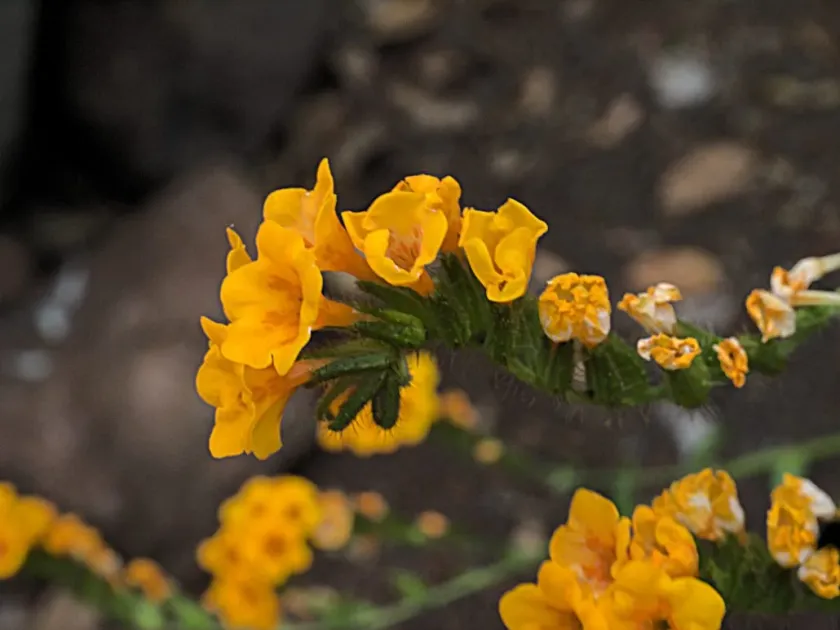
Description
Sowing dates
Large-flowered fiddleneck (Amsinckia grandiflora) is an endangered annual herb belonging to the Boraginaceae family, native to specific areas in California.
The life cycle begins with seed germination during the fall, triggered by the onset of seasonal rains that characterize its Mediterranean climate habitat.
Sowing in controlled conservation environments requires careful timing to mimic natural conditions, ensuring that the soil remains moist but not waterlogged.
Seeds are small and possess a complex dormancy mechanism; therefore, cold stratification or specialized treatments are often necessary for successful germination.
As this species is not an agricultural crop, there are no standard industrial sowing protocols; all cultivation efforts are directed toward recovery and restoration.
Growing requirements
This plant thrives in well-drained, nutrient-rich soils, often preferring clay-based substrates that can retain sufficient moisture during the cooler growing season.
Full sun exposure is an absolute requirement for the species, as it competes poorly with taller vegetation and thrives in open, undisturbed habitats.
The climate must be characterized by mild, wet winters and long, hot, dry summers, which signal the end of the vegetative phase for this annual herb.
Maintenance of the soil profile is crucial; the species is highly sensitive to soil compaction and disturbance caused by human or mechanical activity.
Effective management in restored habitats involves controlling vegetation height to prevent the exclusion of this sun-loving species by faster-growing flora.
Main diseases and pests
The primary threats include habitat loss due to agricultural expansion, urban development, and the degradation of native grasslands through overgrazing.
Invasive non-native plant species outcompete the fiddleneck for light, water, and nutrients, which remains a leading cause of population decline.
Pathogens such as various soil-borne fungi may cause root rot under conditions of poor drainage or excessive humidity during the spring growth phase.
Herbivory by both native and introduced animals poses a significant risk to the reproductive success of the plant, as floral damage prevents seed set.
Altered fire regimes and climate-induced extreme drought cycles negatively impact the soil seed bank, making natural recovery increasingly difficult.