
Douglas fiddleneck
Amsinckia douglasiana
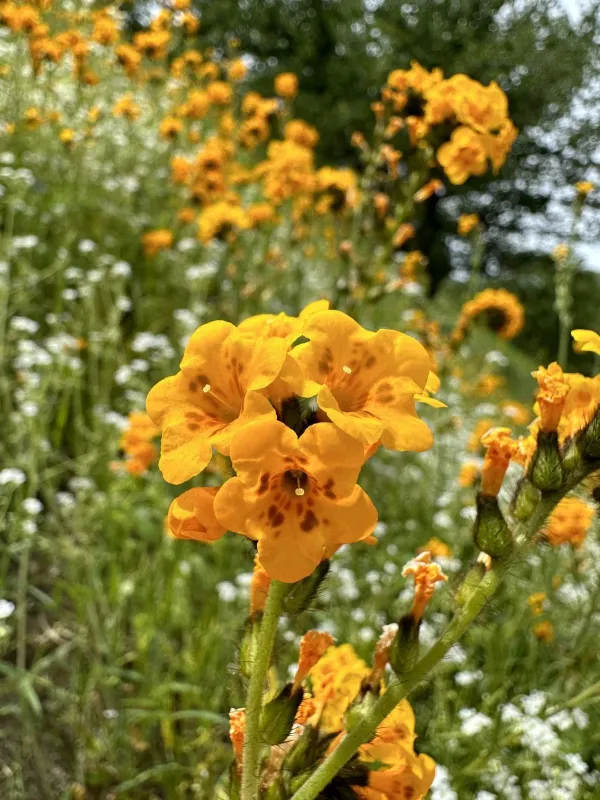
Description
Sowing dates
Douglas fiddleneck is an annual herbaceous plant that typically germinates during the fall and early winter months following the first significant rainfall.
The seeds possess a mechanism of dormancy, allowing them to remain viable in the seed bank for several years until optimal moisture conditions occur.
Early emergence is a critical survival strategy, providing the plant with a competitive advantage for nutrients and sunlight during the cool season.
The speed of germination is heavily dependent on ambient soil temperatures, which must remain within a moderate range for successful establishment.
Successful colonization often occurs in disturbed areas where the soil surface has been recently exposed to light and moisture.
Growing requirements
This species belongs to the Boraginaceae family and is well-adapted to the Mediterranean climate, characterized by dry summers and wet winters.
It thrives in open, sunny habitats and exhibits high tolerance for various soil textures, including well-drained sandy and loamy soils.
The plant demonstrates significant physiological drought resistance, allowing it to complete its life cycle before the onset of extreme summer heat.
Soil fertility requirements are relatively low, enabling the plant to grow in nutrient-poor environments where other species might fail.
Adequate soil aeration is essential, as the species is sensitive to waterlogged conditions that can cause physiological stress and root decay.
Main diseases and pests
Fungal diseases, particularly powdery mildew, can significantly affect plant health when humidity levels remain consistently high during the spring.
Several types of insect pests, such as weevils and aphids, may feed on the foliage and reproductive structures, potentially reducing seed output.
The presence of stiff hairs covering the entire plant serves as a chemical and physical defense against grazing animals and large herbivores.
Competition from invasive perennial grasses and non-native vegetation represents a major threat to the density of established populations.
- Fungal leaf spots and blight.
- Larval damage to reproductive shoots.
- Viral pathogens transmitted by insect vectors.
- Soil-borne pathogens affecting root development.