
Eastwood's fiddleneck
Amsinckia eastwoodiae
Description
Growing requirements
Eastwood's fiddleneck (Amsinckia eastwoodiae) is an annual herb within the Boraginaceae family. Native to the western parts of North America, it has successfully adapted to diverse arid environments.
The plant thrives in open areas with high sunlight exposure and well-drained, often disturbed, sandy or loamy soils. Its ability to tolerate low-moisture conditions is supported by dense trichomes covering the stems and foliage.
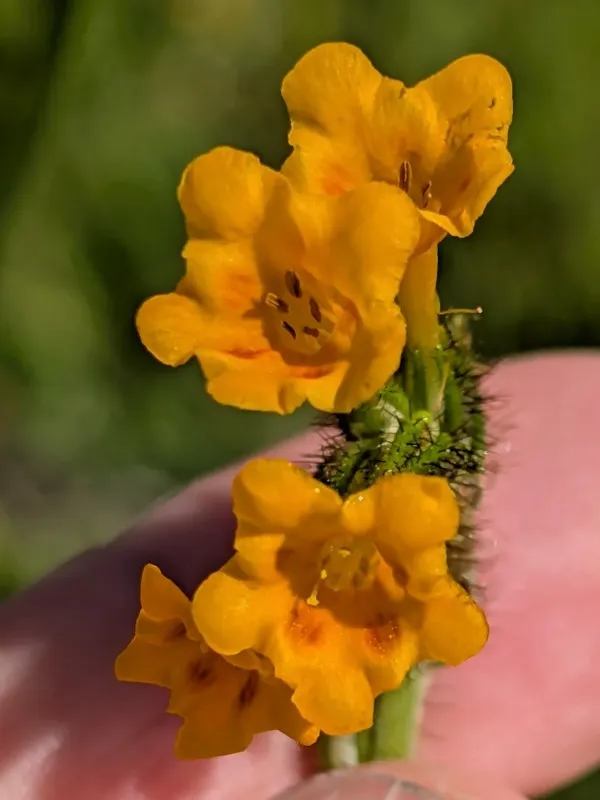
Botanically, it is recognized by its distinct coiled inflorescences that resemble the neck of a fiddle. The small, yellow-to-orange flowers typically bloom throughout the spring, producing significant amounts of seeds.
Regarding soil requirements, this species favors conditions with good drainage and is often found in sites that have been recently disturbed by human activity or grazing. It possesses a high tolerance for varying soil pH levels.
In terms of agricultural value, Eastwood's fiddleneck is strictly categorized as a weed. It lacks any commercial cultivation purpose and represents a significant obstacle to crop management in infested regions.
Main diseases and pests
The primary threat posed by this plant is its competitive ability to outcompete crops for vital soil resources. Its rapid growth cycle allows it to establish dominance before many desirable crops can fully develop.
Beyond resource competition, the plant serves as a host for various agricultural pests and viral diseases. This biological association complicates integrated pest management strategies on commercial farms.
Livestock safety is a major concern as Eastwood's fiddleneck contains pyrrolizidine alkaloids. These toxins can cause chronic liver damage in horses, cattle, and sheep if consumed in forage or pasture.
Control measures are difficult due to the plant's resilience and the longevity of its seed bank in the soil. Effective management requires a combination of mechanical removal and targeted herbicide application.
Crop rotation and field hygiene are essential practices for farmers to prevent the spread of this species. Monitoring areas for early emergence is crucial for successful suppression of the weed population.