
Common Fiddleneck
Amsinckia lunaris
Description
Growing requirements
Amsinckia lunaris, commonly known as the common fiddleneck, is an annual herbaceous plant belonging to the Boraginaceae family. While it possesses distinct botanical characteristics, it is primarily recognized in agricultural settings as a competitive weed species.
The plant originates from the western regions of North America, particularly California. It thrives in open, disturbed habitats and has spread to various regions where climatic conditions favor Mediterranean-like weather patterns.
Regarding soil and environmental needs, Amsinckia lunaris prefers full sun exposure and well-drained soil types. It demonstrates strong resilience to varying moisture levels but performs best in environments that provide consistent early-season precipitation.
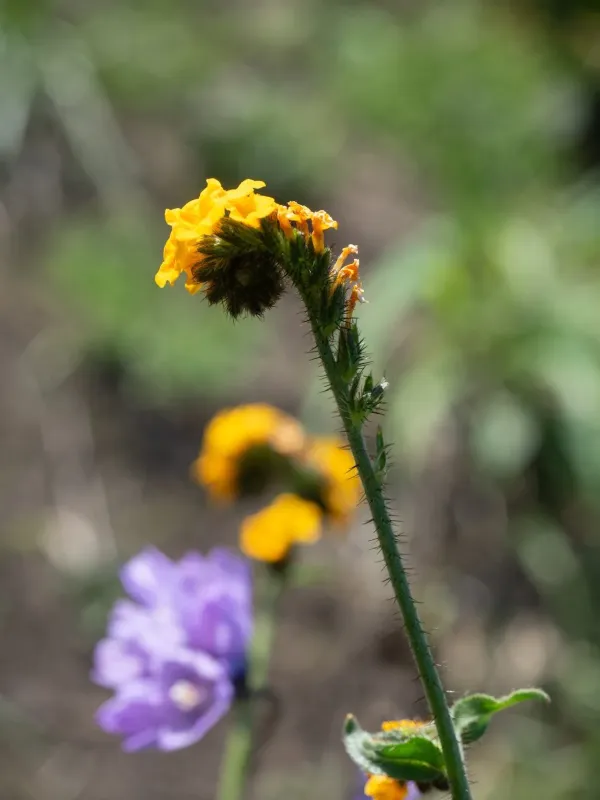
Botanically, the species is distinguished by its stiff, bristly hairs that cover the stems and leaves, providing a mechanical defense against herbivores and aiding in water retention during drier periods.
Its growth habit involves a fast-growing rosette stage followed by the rapid development of coiled inflorescences, from which the common name "fiddleneck" is derived, ensuring successful seed dispersal before the peak heat of summer.
Main diseases and pests
Major biological threats to the species include fungal infections such as powdery mildew. These pathogens can significantly inhibit the plant's development when environmental conditions, such as high humidity and suboptimal airflow, are present.
Various insect pests, including aphids and specific species of weevils, regularly colonize the foliage and reproductive structures. While these pests may reduce the plant's vigor, they are rarely sufficient to completely eradicate a local population.
From an agricultural standpoint, the plant poses a significant toxicity risk. It contains pyrrolizidine alkaloids that can cause liver damage in livestock if ingested, making it a critical concern for pastures and hay production.
Managing this species requires a robust integrated weed management strategy. This includes timely cultivation, the use of competitive cover crops, and the application of herbicides specifically labeled for broadleaf weed control.
Early identification of seedlings is crucial for effective control. Producers should implement field monitoring protocols during the early spring to prevent the establishment of dense, seed-producing colonies that could compromise crop yields.